Dimorphorchis lowii: The Two-Faced Orchid
Among the many fascinating species in the orchid world, few are as unique and captivating as Dimorphorchis lowii. Native to the rainforests of Borneo and parts of Southeast Asia, this rare orchid is known for its unusual flowering pattern and striking beauty. Let’s dive into what makes Dimorphorchis lowii a must-have for collectors and an object of admiration for botanists around the globe.
What is Dimorphorchis lowii?
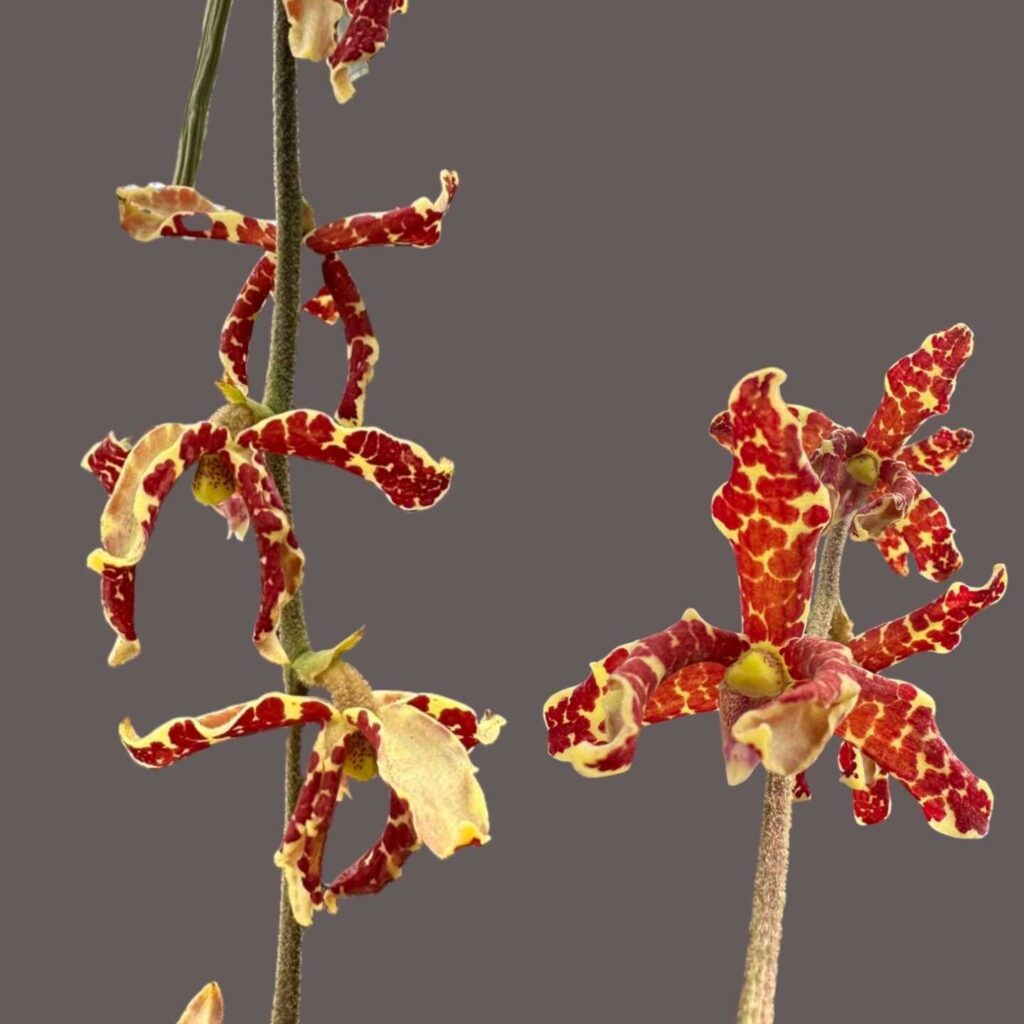
Dimorphorchis lowii belongs to a small but extraordinary genus in the orchid family. The genus name “Dimorphorchis” literally means “two-formed orchid,” and Lowii lives up to that name in the most spectacular way. This species produces two distinct types of flowers on the same inflorescence — a phenomenon that’s rare and awe-inspiring.
The first few flowers at the base of the flower spike are typically female, while those that follow are male — each type differing not just in function but also in size, shape, and coloration. It’s like having two orchid species blooming on a single plant!
Appearance and Growth
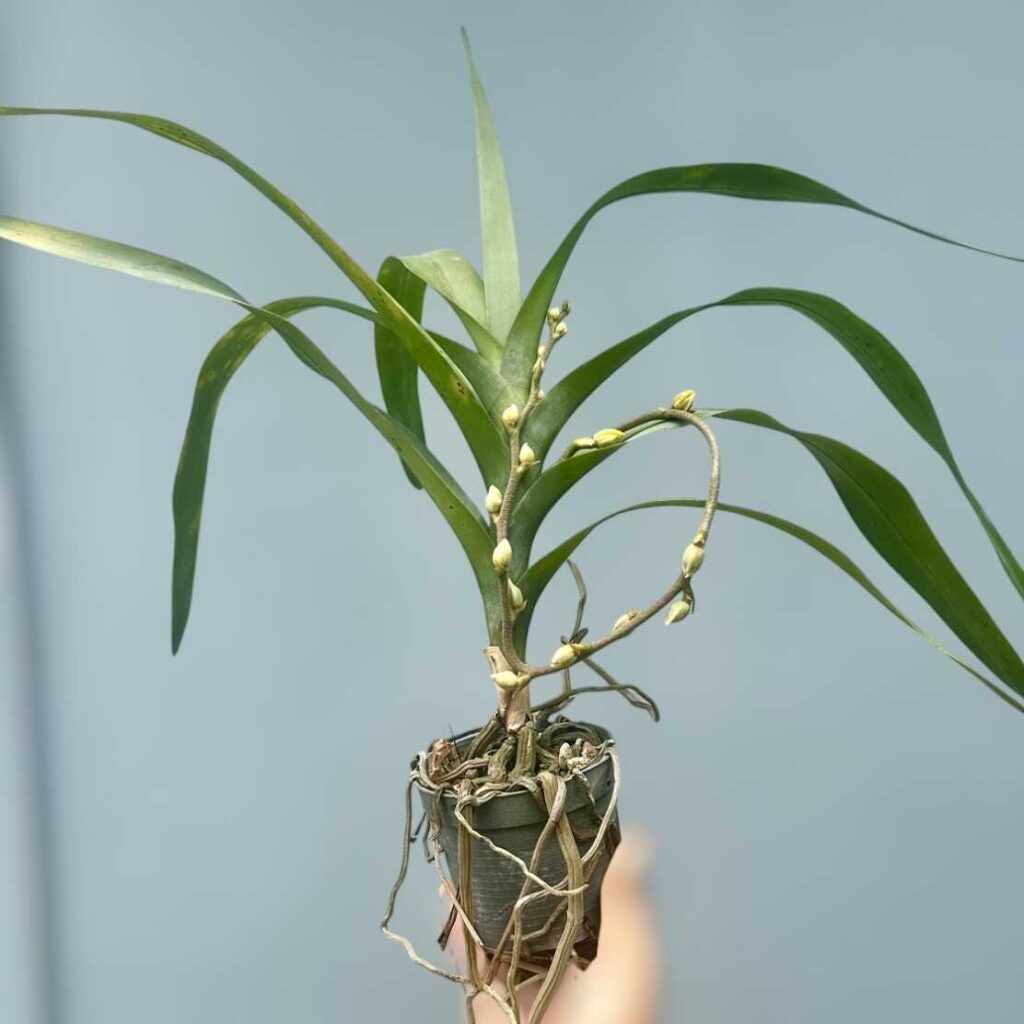
- Growth Habit: Dimorphorchis lowii is a large, monopodial epiphyte that can grow to impressive heights under ideal conditions. In the wild, it climbs tall trees, often producing long, pendulous inflorescences that dangle dramatically.
- Leaves: The leaves are long, leathery, and alternate along the central stem — typical of vandaceous orchids.
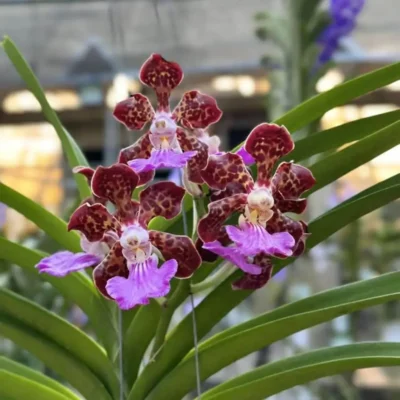
- Flowers: The female flowers are larger, showy, and often more vividly colored, while the male flowers are smaller but equally intricate. The coloration is usually a blend of yellow, brown, red, or orange tones, making it a truly exotic spectacle.
Natural Habitat
This orchid thrives in humid, lowland rainforests at elevations between 200 to 800 meters. It prefers warm temperatures, bright filtered light, and excellent air movement — a typical environment in tropical Southeast Asia. Due to habitat loss and over-collection, Dimorphorchis lowii is considered a rare species in the wild.
Cultivation Tips
Growing Dimorphorchis lowii can be a rewarding challenge for experienced orchid growers. Here’s how to care for it:
- Light: Provide bright, indirect light. Too much direct sun can scorch the leaves, while too little light may hinder blooming.
- Humidity: Aim for 70–90% humidity, with daily misting or a humidifier in dry climates.
- Temperature: Keep temperatures warm — ideally 25–32°C during the day and not below 18°C at night.
- Watering: Water regularly during the growing season but ensure quick drainage. Allow the roots to dry slightly between waterings.
- Mounting or Basket: Due to its climbing habit, it does well mounted on cork or grown in a large basket with coarse bark or coconut husk to allow the roots to breathe.
- Feeding: Fertilize with a balanced orchid fertilizer every two weeks during active growth.
Flowering Cycle
Dimorphorchis lowii usually blooms once a year, often during the rainy season. Patience is key — flowering typically occurs when the plant is mature and has received proper care for a few years. But when it finally blooms, it puts on a show like no other.
Why Collectors Love It
- Its dual flower forms make it a botanical curiosity.
- It’s a conversation piece in any orchid collection.
- It’s a testament to a grower’s skill, as it requires dedication and care to thrive.
Difficult Things About Growing Dimorphorchis lowii
1. Size and Space Needs
• This is a large, climbing orchid. It can grow several meters tall, which makes it unsuitable for small indoor spaces.
• Many growers underestimate how much vertical space and support the plant will need over time.
2. Flowering is Infrequent and Maturity Takes Time
• Dimorphorchis lowii often takes years to reach blooming size.
• It may not bloom annually, even when healthy — especially if growing conditions fluctuate.
• Patience is essential. Many give up too soon.
3. Humidity and Airflow Balance
• This orchid needs very high humidity (70–90%), but at the same time, it must have excellent airflow to prevent rot.
• Beginners often overwater or provide stagnant humidity, leading to fungal problems.
4. Feeding Requirements Are High
• It is a heavy feeder during the growing season, more like Vanda orchids. Inadequate feeding leads to weak growth and no blooms.
5. Mounting Challenges
• It prefers being mounted or placed in open baskets, which can be intimidating for growers used to pots.
• Mounted plants dry out faster and require more frequent watering, which can be hard to keep up with in dry climates.
⸻
Common Misunderstandings About Dimorphorchis lowii
1. “It’s Just Like a Vanda”
• While it looks somewhat like a Vanda and has a similar growth habit, it is much more sensitive to environmental stress and doesn’t adapt as easily to indoor conditions.
• Vanda can bloom multiple times a year; Dimorphorchis lowii may only bloom once a year, or less.
2. “The Flowers Are the Same on the Spike”
• Many people don’t realize that this orchid has two different flower forms — they expect uniform blooms.
• The male and female flowers look completely different, which can be confusing if you’re not prepared for it.
3. “It Will Bloom Soon After I Buy It”
• Unless you purchase a blooming-size plant (which is rare and expensive), expect at least 2–3 years of growing before it will flower under home conditions.
4. “I Can Grow It Indoors Like Other Orchids”
• This is not a good candidate for windowsill growing. It thrives best in greenhouses, orchid houses, or outdoors in tropical climates with filtered light.