Complete Guide to Dendrobium fimbriatum
If there is one orchid that perfectly blends wild beauty, strong character, and unforgettable color, Dendrobium fimbriatum easily earns its legendary nickname: the “Golden Dragon” of orchids. With its blazing yellow flowers, dramatic fringed lips, and — in some forms — a mysterious dark center that resembles an eye of a dragon, this species has captured the hearts of orchid collectors for generations.
This guide is written for beginner to intermediate orchid growers who want to understand Dendrobium fimbriatum deeply — from how to identify its different forms, to why it loves strong sunlight, and how to grow it into a powerful, blooming specimen. Whether you are new to species orchids or already growing Dendrobiums, this plant rewards good care with one of the most dramatic floral displays in the genus.
You can also explore live plants and related species at https://siborchid.com.
Why Dendrobium fimbriatum Is Called the “Golden Dragon”
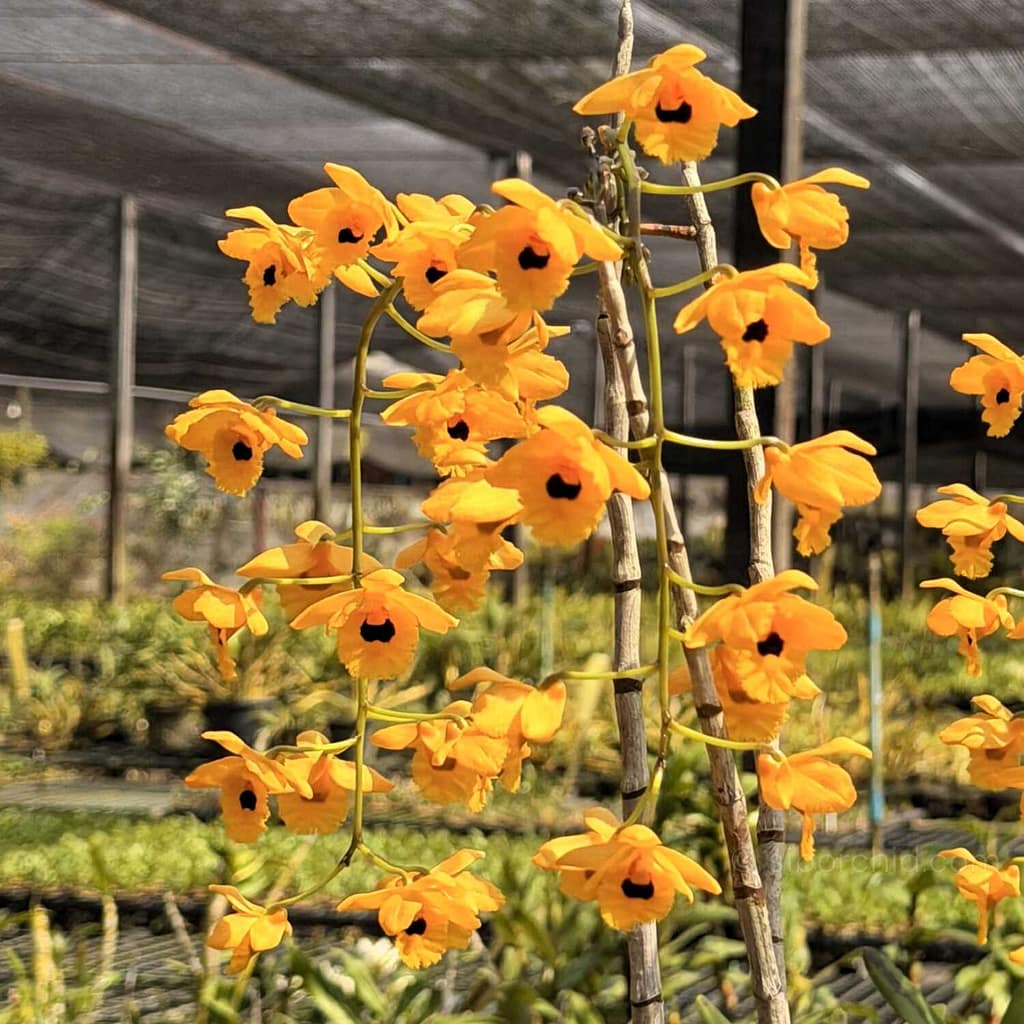
The nickname “Golden Dragon” is not an exaggeration. When Dendrobium fimbriatum blooms, its long canes erupt with large, golden-yellow flowers that look almost mythical. The petals and sepals glow under strong light, while the lip is heavily fringed, giving the flower a wild, fiery appearance.
In the oculatum variety, the effect is even stronger. A deep brown to almost black eye sits at the center of the flower, creating the famous “eye-of-the-dragon” look. This dramatic contrast — bright gold surrounding a dark, intense core — is what makes collectors stop and stare.
Unlike many hybrid orchids bred for perfection, Dendrobium fimbriatum feels raw and natural. It looks like something pulled directly from a sun-drenched forest canopy, and that is exactly where it comes from.

Natural Habitat and Growth Habit
Dendrobium fimbriatum is native to South and Southeast Asia, including India, Myanmar, Thailand, Laos, Vietnam, and southern China. It grows as an epiphyte or sometimes lithophyte, clinging to trees or rocks in open forests.
Key environmental traits of its habitat include:
- Bright, direct to filtered sunlight
- Warm to hot temperatures
- High humidity during the growing season
- Distinct dry and wet periods
This background explains why Dendrobium fimbriatum behaves differently from common houseplant orchids like Phalaenopsis. It is a sun-seeker and a strong grower that prefers intense light and space to stretch.
Plain fimbriatum vs. fimbriatum var. oculatum
One of the most common questions growers ask is:
“What is the difference between Dendrobium fimbriatum and Dendrobium fimbriatum var. oculatum?”
1. Dendrobium fimbriatum (Plain Form)
The standard form of Dendrobium fimbriatum features:
- Bright golden-yellow petals and sepals
- A fringed lip, usually lighter yellow
- A subtle or absent dark marking in the throat
This form is already very showy and blooms freely when mature. It is often slightly easier to find and is an excellent starting point for growers new to species Dendrobiums.
2. Dendrobium fimbriatum var. oculatum
The oculatum variety is where the legend is born.
Distinct features include:
- The same rich golden-yellow flower color
- A dark brown to nearly black eye in the center of the lip
- Much stronger visual contrast and drama
The word oculatum literally refers to an “eye-like” marking, and in this orchid, the name is perfectly deserved. This form is generally more sought after by collectors and may command a higher price.
Both forms share the same growth habits and care requirements, so choosing between them is mostly about aesthetic preference.
Why Dendrobium fimbriatum Is a Sun-Seeker
Among Dendrobiums, fimbriatum is famous for its high light tolerance. This is not an orchid that wants to hide on a shady windowsill.
Ideal Light Levels
- Bright filtered sun to direct morning or late afternoon sun
- Comparable to light levels used for Cattleya orchids
- Leaves should be light green, not dark
If the plant is kept too dark:
- Canes will grow thin and weak
- Flowering may never occur
- The plant may produce leaves but no blooms
Strong light fuels the production of thick, tall canes, and these mature canes are what produce flowers. In nature, Dendrobium fimbriatum often grows high in trees where sunlight is abundant.
Understanding the Cane-Like Pseudobulbs
One of the most important aspects of Dendrobium fimbriatum care is understanding its long, cane-like pseudobulbs.
What Are the Canes?
The tall, upright structures that resemble bamboo are not stems — they are pseudobulbs, specialized organs that store:
- Water
- Nutrients
- Energy for flowering
These canes may grow 60–120 cm or more when mature.
Golden Rule: Never Cut Healthy Canes
Even after the leaves fall, old canes:
- Continue feeding the plant
- Can bloom again in future seasons
- Help support new growth
Cutting green or firm canes is one of the most common beginner mistakes. Only remove canes that are completely dry and dead.

Basic Care Guide for Dendrobium fimbriatum
Light
- High light is essential
- East, south, or west exposure with some protection from harsh midday sun
- Outdoors, bright shade or filtered sunlight is ideal
Temperature
- Warm-growing orchid
- Ideal range: 20–35°C
- Can tolerate cooler nights but dislikes cold, wet conditions
Humidity
- Prefers 60–80% humidity
- Good air movement is critical to prevent rot
High humidity combined with airflow mimics its natural environment and encourages strong growth.
Watering
- Water heavily during the active growing season
- Allow media to dry slightly between waterings
- Reduce watering after canes mature and growth slows
Do not keep the roots constantly wet, especially during cooler periods.
Fertilizer
- Use a balanced fertilizer during active growth
- Apply regularly but lightly
- Reduce feeding once growth matures
Strong feeding supports thick canes, which directly translates to better flowering.

Flowering Season and Blooming Behavior
Dendrobium fimbriatum typically blooms in late winter to spring, depending on climate and growing conditions.
Flowers:
- Emerge from nodes along mature canes
- Can appear in clusters
- Are long-lasting and highly ornamental
A well-grown specimen in full bloom is a showstopper — tall canes covered in glowing yellow flowers with fringed lips dancing in the light.
Common Mistakes to Avoid
- Too little light
- Cutting old canes prematurely
- Overwatering during rest periods
- Poor air circulation in high humidity
Avoiding these mistakes alone can dramatically improve your success with this species.
Is Dendrobium fimbriatum Right for You?
This orchid is ideal if you:
- Enjoy species orchids with strong character
- Can provide bright light
- Appreciate dramatic, natural-looking flowers
It may not be ideal if you only grow low-light orchids indoors without supplemental light.
Finding Quality Dendrobium fimbriatum Plants
When purchasing Dendrobium fimbriatum, look for:
- Firm, healthy canes
- Strong root systems
- Signs of new growth
For selected species orchids and export-quality plants, visit https://siborchid.com, where carefully grown orchids are prepared with proper documentation and professional handling.
Final Thoughts: The Dragon That Rewards Patience
Dendrobium fimbriatum is not a shy orchid. It grows boldly, demands sunlight, and stores its strength in tall canes before unleashing a golden floral display worthy of its dragon nickname.
Whether you choose the classic golden form or the mesmerizing oculatum “dragon eye” variety, this orchid teaches an important lesson: strong light, patience, and respect for its natural rhythm lead to spectacular rewards.
For growers ready to step beyond ordinary orchids, the Golden Dragon is waiting.