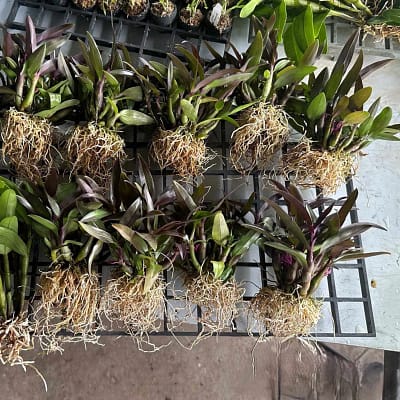
Mini vs. Standard: Which Cattleya Orchid Is Right for Your Small Space?
(siborchid.com – Your Gateway to Orchid Excellence)
Welcome, orchid enthusiasts and budding collectors, to siborchid.com, where we celebrate the majestic beauty of the “Queen of Orchids” – the Cattleya! Known for their spectacular, often fragrant blooms and vibrant colors, Cattleyas are a crown jewel in any orchid collection. However, for those living in urban environments, apartments, or simply with limited growing space, the question often arises: “Can I truly accommodate these magnificent plants?”
The answer is a resounding “Yes!” But to make the best choice for your particular circumstances, it’s crucial to understand the distinct differences between miniature Cattleya orchids and their standard-sized counterparts. This comprehensive guide will delve deep into the characteristics, care requirements, and unique benefits of both, helping you determine which Cattleya queen will reign supreme in your small space.

The Allure of the Cattleya: A Brief Introduction
Before we dive into the size debate, let’s briefly revisit what makes Cattleya orchids so captivating. Belonging to the Orchidaceae family, Cattleyas are epiphytic or lithophytic plants native to Central and South America. They are renowned for their large, showy flowers, often described as having a waxy texture, and many boast intoxicating fragrances that can fill a room. From the classic purples and lavenders to pristine whites, vibrant yellows, and fiery oranges, the color palette is incredibly diverse.
Their pseudobulbs, which store water and nutrients, and leathery leaves give them a robust appearance. While often perceived as challenging, with the right knowledge, Cattleyas can be incredibly rewarding, bringing exotic elegance and a touch of the tropics into your home.
Defining Our Contenders: What Exactly is “Mini” vs. “Standard”?
The terms “miniature” and “standard” aren’t always strictly defined by botanical classification but rather by their mature plant size and growth habit.
- Standard Cattleya Orchids: These are the classic, larger-growing Cattleyas. A mature standard Cattleya can range significantly in size, but typically they produce pseudobulbs that are 6-12 inches (15-30 cm) tall or more, often forming clumps that can reach 1-2 feet (30-60 cm) in width. Their leaves are proportionally large, and their spectacular flowers can span 4-8 inches (10-20 cm) or more across. These are the showstoppers you often see winning awards at orchid shows.
- Miniature Cattleya Orchids: Also sometimes referred to as “compact” or “dwarf” Cattleyas, these are varieties specifically bred or naturally occurring forms that maintain a much smaller overall footprint. Their pseudobulbs are typically under 4-6 inches (10-15 cm) tall, and the entire plant usually stays under 8-12 inches (20-30 cm) in height and width. While the plants are smaller, their flowers are often surprisingly large in proportion to the plant, sometimes reaching 2-4 inches (5-10 cm) across, making them incredibly impactful despite their diminutive size.
It’s important to note that “miniature” refers to the plant’s overall growth habit, not necessarily the size of its individual flower, although the flowers tend to be smaller than those of their giant relatives. Breeders have done incredible work creating hybrids that offer vibrant blooms on a compact frame.

The Case for Miniature Cattleyas in Small Spaces
For urban dwellers, apartment gardeners, or anyone with limited shelf space, miniature Cattleyas are often the immediate and obvious choice. Here’s why they shine:
- Space Efficiency: This is the most compelling reason. A mini Cattleya can comfortably reside on a windowsill, a small shelf, a desk, or in a terrarium without overwhelming the space. You can often fit several miniature orchids in the footprint of a single standard one, allowing for greater variety in your collection.
- Quicker Maturation and Blooming: Many miniature Cattleya hybrids are bred for faster growth and blooming cycles. This means you won’t have to wait as long to enjoy their beautiful flowers, making them incredibly gratifying for impatient growers!
- Easier to Manage in Controlled Environments: Their smaller size makes them ideal for growing under artificial lights or within small humidity domes/terrariums, where maintaining consistent environmental conditions is easier.
- Charming Aesthetic: There’s something undeniably charming about a compact plant producing a surprisingly large, vibrant flower. They make excellent focal points and conversation starters.
- Variety: The world of miniature Cattleyas is vast and continually expanding thanks to dedicated breeders. You’ll find an incredible array of colors, patterns, and fragrances packed into these small packages.
The Case for Standard Cattleyas (Even in Small Spaces!)
Don’t dismiss standard Cattleyas too quickly, even if space is a premium. While they demand more room, they offer unique advantages:
- Grandeur and Impact: There’s no denying the majestic presence of a fully bloomed standard Cattleya. Their larger flowers, sometimes with intricate frilly lips and wider petals, make a truly breathtaking statement.
- More Robust Root Systems: Generally, larger plants have more extensive root systems, which can sometimes make them a bit more forgiving of minor watering or environmental fluctuations compared to their mini counterparts.
- Potential for More Blooms: A large, mature standard Cattleya, when well-grown, can produce multiple inflorescences (flower spikes) each with several blooms, creating an incredibly lush and abundant display that a single miniature plant might struggle to match.
- Classic Appeal: For those who appreciate the historical and classic forms of Cattleya species and primary hybrids, many of these naturally fall into the standard size category.
- Less Frequent Repotting: While still requiring repotting as they grow, the sheer volume of potting mix in a larger pot for a standard Cattleya might mean slightly less frequent repotting than a rapidly growing miniature in a tiny pot that can quickly dry out.
Key Considerations for Your Small Space: A Head-to-Head Comparison
Now, let’s break down the practical aspects of growing both in a limited environment.
1. Space Requirements (The Obvious One)
- Miniature: Absolutely ideal. A 2-4 inch (5-10 cm) pot is common. They can fit on any windowsill, small shelf, or even hang in a compact area. Think about vertical space too; mini Cattleyas can often be stacked or arranged creatively.
- Standard: Requires a dedicated spot. A mature plant might need an 8-10 inch (20-25 cm) pot and a foot or more of horizontal and vertical space. If you have one prime, bright spot, a standard Cattleya can be a magnificent centerpiece. If you dream of a collection, standards quickly become challenging.
2. Light Requirements
Both mini and standard Cattleyas generally prefer bright, indirect light. Think of a sunny window where the plant receives good light for at least 6 hours, but not direct scorching afternoon sun. East-facing windows are often ideal, or a south/west window with sheer curtains.
- Miniature: Due to their size, they are excellent candidates for grow lights. A small LED grow light setup above a shelf can provide perfect conditions for multiple mini Cattleyas, allowing you to grow them anywhere, regardless of natural light.
- Standard: Also benefit from grow lights if natural light is insufficient, but require more powerful lights or a larger illuminated area to cover their wider spread.
(For detailed light recommendations, check out our growing guides at siborchid.com/care-guides)
3. Watering Needs
This is where the differences can be subtle but significant, particularly related to pot size and growing media. Cattleyas prefer to dry out somewhat between waterings.
- Miniature: Often grown in smaller pots (2-4 inches) and sometimes in finer bark mixes or even mounted. Smaller pots dry out much faster, especially in warm, airy conditions. You might find yourself watering miniature Cattleyas every 2-4 days, potentially even daily if mounted in very hot, dry weather. This requires vigilance.
- Standard: Larger pots (6-10 inches) with coarser bark mixes retain moisture for longer. You might water standard Cattleyas every 5-10 days, depending on environmental factors. They are generally more forgiving if you miss a day, as their larger pseudobulbs can store more water.
(Find our specialized potting mix recommendations at siborchid.com/potting-mixes)
4. Humidity
Cattleyas thrive in moderate to high humidity (50-70%). This is often a challenge in heated or air-conditioned homes.
- Miniature: Their compact size makes them perfect for creating localized humidity. They fit well on pebble trays, under clear domes, or within small, dedicated orchid terrariums. You can achieve excellent humidity with less effort than for a larger plant.
- Standard: Requires humidifiers for a larger area or strategic placement near other plants. Pebble trays for standard Cattleyas need to be much larger to have an effect.
5. Potting Media & Repotting
Both types prefer well-draining, airy media that allows for good air circulation around the roots. Common choices include fir bark, sphagnum moss (used cautiously, especially for minis), perlite, and charcoal mixes.
- Miniature: May require more frequent repotting if grown in very small pots, as they can quickly outgrow their space or the media breaks down faster. Their fine roots can also be delicate.
- Standard: Repotting is typically needed every 1-2 years, or when the plant outgrows its pot significantly. The sheer volume of media means media breakdown might be slower, but the process of repotting a large, clumpy Cattleya can be more involved.
6. Temperature
Both mini and standard Cattleyas generally prefer intermediate to warm temperatures:
- Day: 65-80°F (18-27°C)
- Night: 55-65°F (13-18°C)A diurnal temperature drop (cooler nights) is beneficial for many varieties and can help trigger blooming. Neither size category has significantly different temperature needs beyond what their genetic lineage dictates.
7. Fertilizing
Fertilize regularly during the active growing season (spring through fall) and reduce frequency in winter. A balanced orchid fertilizer (e.g., 20-20-20 or a specialized orchid blend) at a diluted strength is usually recommended.
- Miniature: Because they are often watered more frequently, nutrients can leach out faster. Consistent, diluted feeding is crucial.
- Standard: With larger pots, nutrients might be retained slightly longer, but consistent feeding is still key to robust growth and blooming.
(Explore our recommended orchid fertilizers at siborchid.com/fertilizers)
Making Your Decision: Which Cattleya Is for You?
To help you decide, ask yourself these questions:
- How much physical space do I realistically have?
- If a windowsill is your absolute limit: Miniature.
- If you have a dedicated plant stand or a corner with good light: A standard might fit.
- How much time can I dedicate to watering and care?
- If you enjoy frequent, hands-on care and checking your plants often: Miniature (due to faster drying).
- If you prefer a slightly more laid-back watering schedule: Standard (larger pots dry slower).
- What is my experience level with orchids?
- Beginners might find the watering nuances of miniatures a bit trickier, but their small size makes environmental control easier. A well-chosen miniature hybrid can be very rewarding.
- More experienced growers comfortable with larger plants might lean towards standard for their dramatic blooms.
- What aesthetic am I going for?
- A charming collection of diverse, compact plants: Miniature.
- One grand, show-stopping focal point: Standard.
- Do I want to use artificial lights?
- If yes, miniatures are incredibly efficient under small grow lights.
- If relying solely on natural light and it’s plentiful, both can thrive, but a standard will need a larger bright zone.
Recommended Varieties for Small Spaces (A Taste from siborchid.com)
While we can’t list every amazing hybrid, here are examples of what you might look for:
Miniature Cattleya Examples:
- Cattleya ‘Little Stars’: A classic white star-shaped bloom, often fragrant, on a compact plant.
- Cattleya ‘Love Sound’: Known for beautiful lavender and yellow combinations.
- Laelia anceps (compact forms) / Rhyncholaelia hybrids: Many of these related genera and their hybrids offer fantastic compact growth with impressive flowers.
- Species like Sophronitis coccinea or Cattleya cernua: These are true miniatures, though they can be a bit more demanding in terms of specific culture.(Browse our current selection of miniature Cattleyas at siborchid.com/mini-cattleyas)
Compact Standard Cattleya Examples (for those with slightly more room):
- Look for hybrids with parents known for compact growth, even if the overall plant is larger than a “mini.” Many modern hybrids are bred to be more accommodating than the giant species of yesteryear.
- Cattleya ‘Portia’: A classic, often compact, with beautiful lavender clusters.
- Hybrids involving Cattleya labiata or Cattleya mossiae: While species can be large, many of their compact hybrids maintain good flower size on a more manageable plant.(Discover our full range of beautiful Cattleya orchids at siborchid.com/cattleyas)
Conclusion: Embrace the Cattleya, Whatever Your Space!
Whether you opt for the charming compactness of a miniature Cattleya or make room for the majestic presence of a standard, the joy of growing these “Queens of Orchids” is unparalleled. With careful consideration of your available space, light, and watering habits, you can absolutely bring the vibrant colors and intoxicating fragrances of Cattleya orchids into even the smallest of homes.
At siborchid.com, we are passionate about helping every orchid enthusiast find their perfect plant and achieve blooming success. Explore our extensive collection, find detailed care guides, and join our community of growers. Your next Cattleya adventure awaits!
Happy Growing from the team at siborchid.com!