Sunlight is a crucial factor in the growth and blooming of orchids. Providing the appropriate amount of light for each type of orchid is essential. If orchids receive too little or too much light, it can negatively affect their growth, reduce blooming, or even lead to death.
The Importance of Sunlight for Orchids
Sunlight is the primary source of energy for photosynthesis, which orchids use to produce their own food. Receiving an adequate amount of sunlight will help orchids maintain vibrant green leaves, robust pseudobulbs, and beautiful blooms.
Effects of Insufficient Light on Orchids
- Pale, yellowing, and falling leaves:
- Reason: Chlorophyll, the green pigment in leaves that absorbs light for photosynthesis, decreases when light is insufficient, causing leaves to turn pale yellow.
- Impact: Reduced photosynthesis leads to less food production, affecting growth and potentially causing leaves to fall.
- Long, thin pseudobulbs:
- Reason: Orchids stretch toward light, causing pseudobulbs to become long and thin.
- Impact: Thin pseudobulbs are weaker and store less energy.
- Reduced or no blooming:
- Reason: Blooming requires a lot of energy. Without enough light, the energy from photosynthesis decreases, preventing the orchid from having enough energy to produce flowers.
- Impact: The orchid will produce fewer flowers or may not bloom at all.
- Weak plant:
- Reason: Orchids deprived of light lack nutrients, weakening their immune systems.
- Impact: A weak orchid is more susceptible to diseases and pests, leading to easier disease development.
- Death:
- Reason: Prolonged lack of light leads to a shortage of food, eventually causing the orchid to die.
Effects of Excessive Light on Orchids
- Leaf burn: Leaves may develop burnt spots or burn entirely due to too much light.
- Root rot: Roots may rot due to excessively high temperatures.
- Slow growth: The growth of the orchid slows down.
- Damaged blooms: Blooms may get damaged by excessive sunlight.
Categorizing Orchids by Light Requirements
- Orchids that need a lot of light:
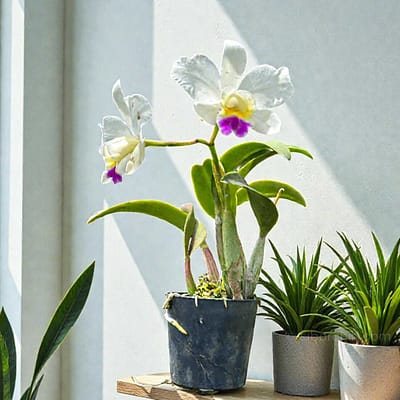
- Examples: Vanda, Cattleya, Dendrobium, Oncidium
- Characteristics: These orchids often have thick, strong leaves and tolerate sunlight well.
- Lighting method: Place them in areas with direct sunlight or use high-intensity grow lights.
- Orchids that need moderate light:
- Examples: Phalaenopsis, Some Dendrobium Miniature size
- Characteristics: These orchids have relatively thick leaves, but not as sturdy as those in the first group.
- Lighting method: Place them in areas with filtered light or use medium-intensity grow lights.
- Orchids that need low light:
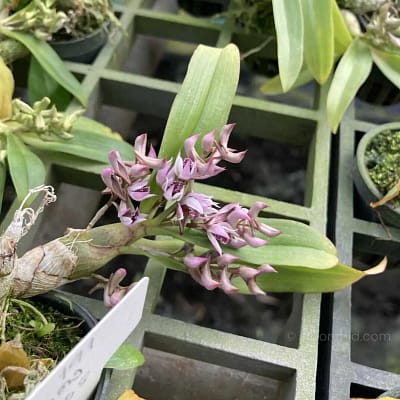
- Examples: Paphiopedilum, Miniature Orchid, Bulbophyllum
- Characteristics: These orchids have thin, soft leaves.
- Lighting method: Place them in shaded areas or use low-intensity grow lights.
How to Provide Appropriate Light
- Using natural light: Place orchids in areas with filtered sunlight, such as near a window that doesn’t get direct sunlight or under tree shade.
- Using grow lights: In areas without natural sunlight, you can use grow lights to supplement the light.
- Using shade cloth: If the sunlight is too intense, use a shade cloth to reduce light intensity.
Additional Tips
- Observe the leaves: The color of orchid leaves can indicate if they are receiving enough light. Bright green leaves indicate sufficient light.
- Rotate orchid pots periodically: This ensures that all parts of the orchid receive light evenly.
- Adjust the orchid’s position: Change the placement of the orchid based on the season and weather conditions.