Coelogyne trinervis: The “Three-Nerved” Orchid I’ll Never Stop Loving
If you’re an orchid lover like me, there’s something magical about discovering a species that feels both subtle and special. Coelogyne trinervis is one of those gems — elegant, somewhat understated, but with personality and charm to spare. In this post, I’ll dive into its natural habitat, botanical features, care tips, propagation, and why every orchid collection (big or small) should give it a spot. (Yes, I’m biased — but I hope you’ll be too after you read this.)
Note / Link: For more on Coelogyne species, check out the resources at siborchid.com.
Origins & Natural Habitat
Coelogyne trinervis was first described by John Lindley in 1830. Its native range extends from Assam, southern Yunnan (China), through Indo-China, and into western and central Malesia (Sumatra, Java, etc.). It is a pseudobulbous epiphyte (it grows on other plants, not in soil) and often found in humid forest environments. In Thailand and nearby areas, it is considered a warm- to intermediate-growing species, often found at lower elevations (some sources say up to ~100 m).
So when you’re growing C. trinervis in cultivation, you’re imitating a tree-dwelling orchid in tropical forests — moderate light, humidity, good air movement, and careful watering.
The species epithet trinervis literally means “three-veined” (tri = three, nervis = nerves/veins). Many enthusiasts note that the leaves of C. trinervis tend to show three prominent veins or ribs running along them — a neat identifying feature.
Botanical Description & Bloom
The plant forms ovoid or slightly compressed pseudobulbs that are somewhat spaced along the rhizome. Each pseudobulb typically carries two linear leaves (long and narrow) emerging from its apex. The leaves, as mentioned, often show three raised veins / ribs as you look along their length. That gives the plant its name and a distinctive texture/character.
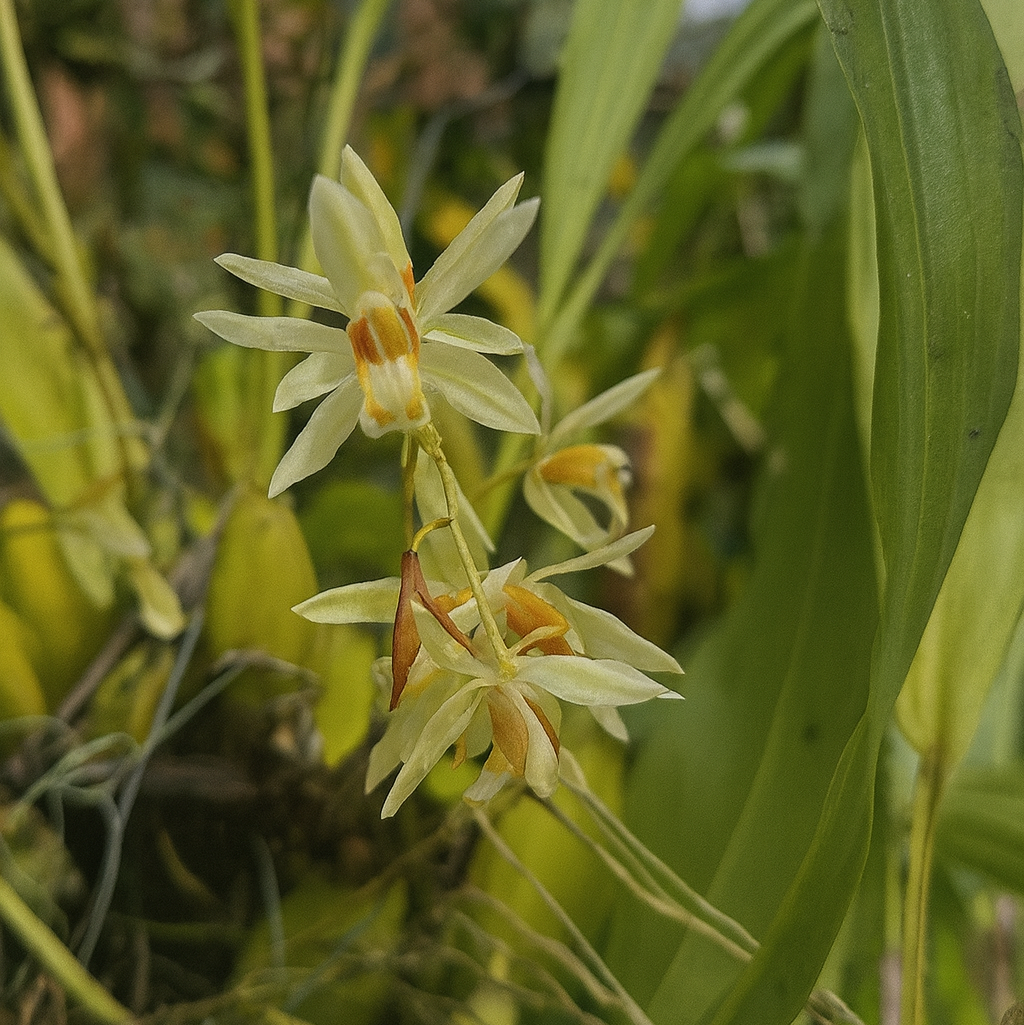
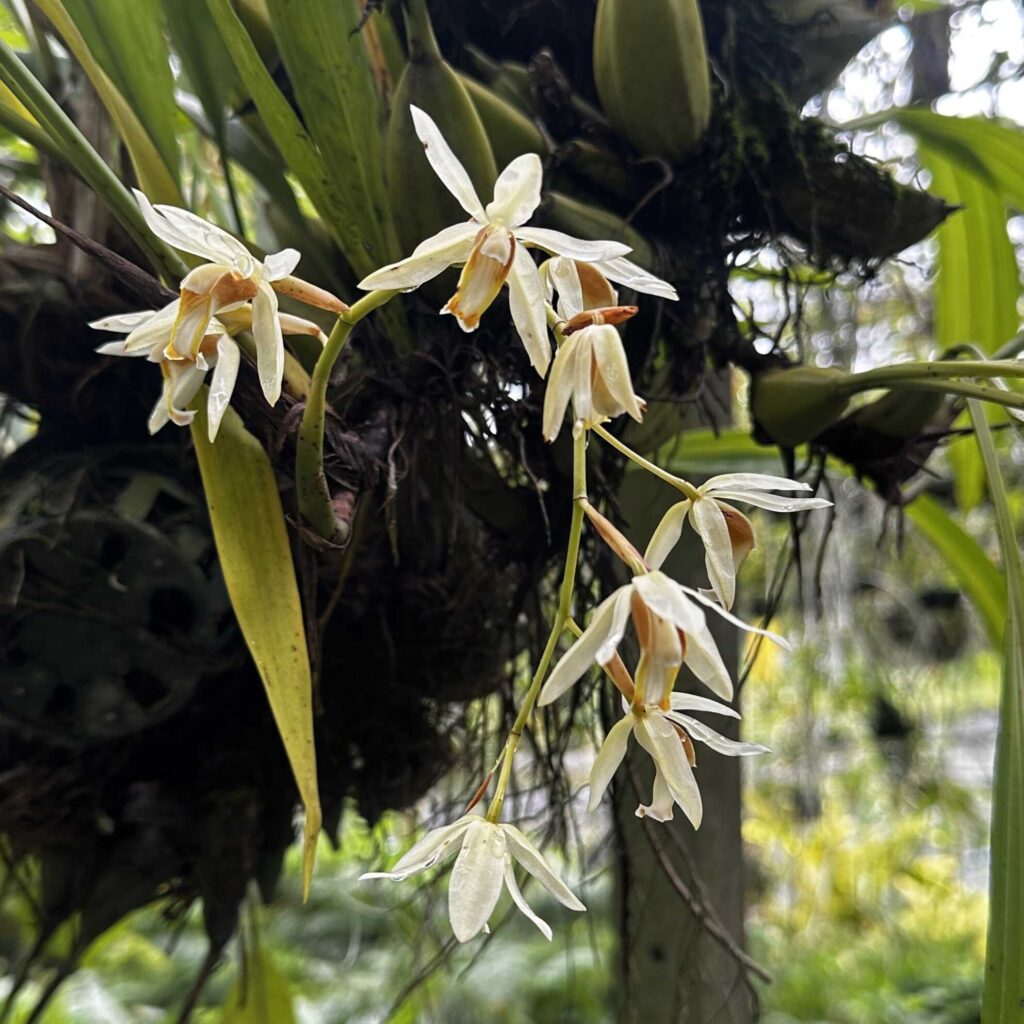
Flowering usually occurs in fall / autumn in many cultivation reports. The inflorescences are pendant (hanging) and develop from the apex of new growths (i.e. after the new pseudobulb begins to grow). You might see 3 to 5 flowers (sometimes more) on a stalk about 4” (10 cm) or so in length. The flowers are modest in size (around 1 inch / 2.5 cm).
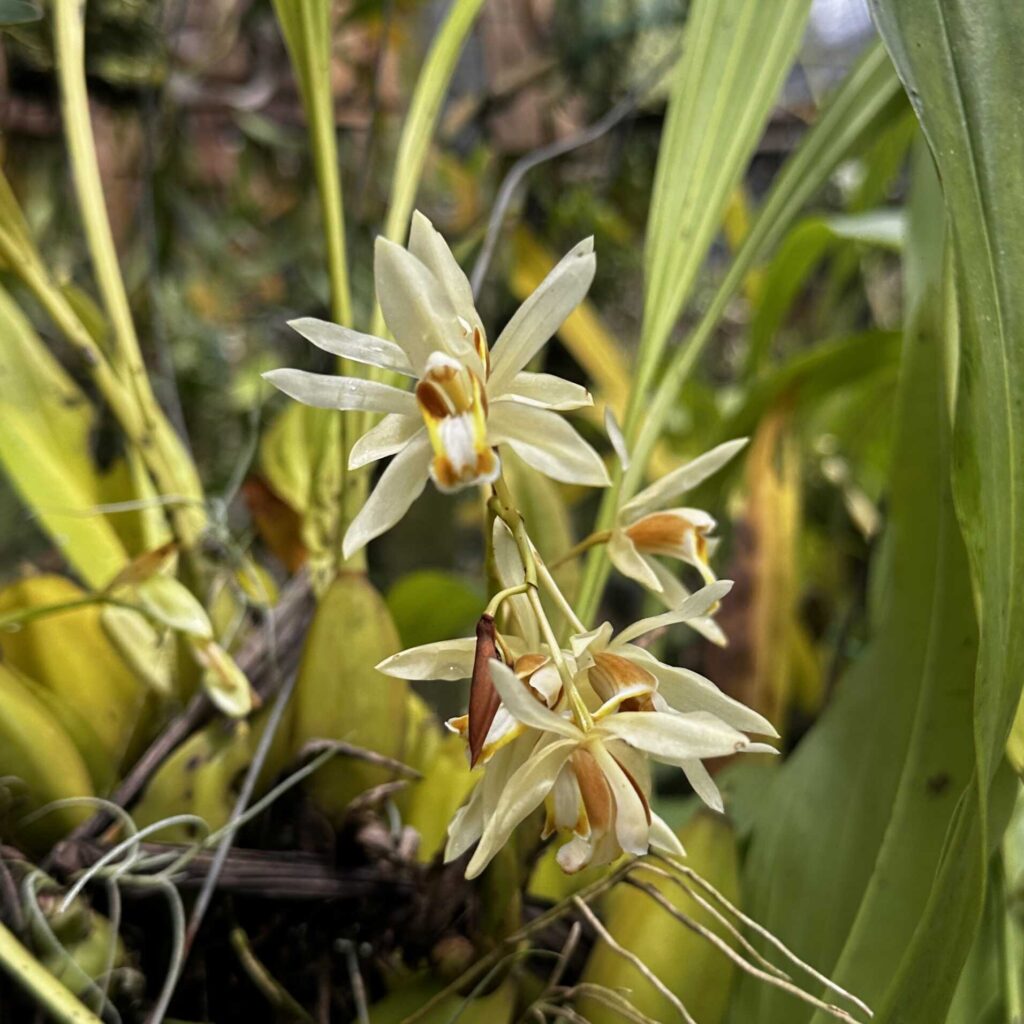
Coloration is often light — pale yellows or creamy tones, sometimes with gold or deeper highlights on the lip/column. The blossoms tend to carry a pleasant fragrance, especially noticeable in favorable growing conditions.
In short: not a flamboyant showstopper, but a graceful, delicate flowering that rewards patience.
Care Tips (From One Orchid Lover to Another)
This orchid prefers bright, indirect light — think dappled shade under trees, not full sun. Too much direct sun will scorch leaves; too little and it won’t flower. If you’re growing indoors or in a greenhouse, aim for filtered light, perhaps with ~50% shade.
As a warm to intermediate grower, aim for daytime temperatures around 25–30 °C, with nighttime dips perhaps down to 15–20 °C. Humidity around 60–80% is ideal, along with gentle air movement to keep the leaves dry and healthy.
Because it’s epiphytic, the plant doesn’t want to sit “wet” all the time, but it also doesn’t want to dry out completely. A common approach: water regularly during active growth, keeping the medium lightly moist but not soggy. In cooler or less active periods, reduce watering and let it almost dry before watering again. Always use good quality water such as rainwater or RO water.
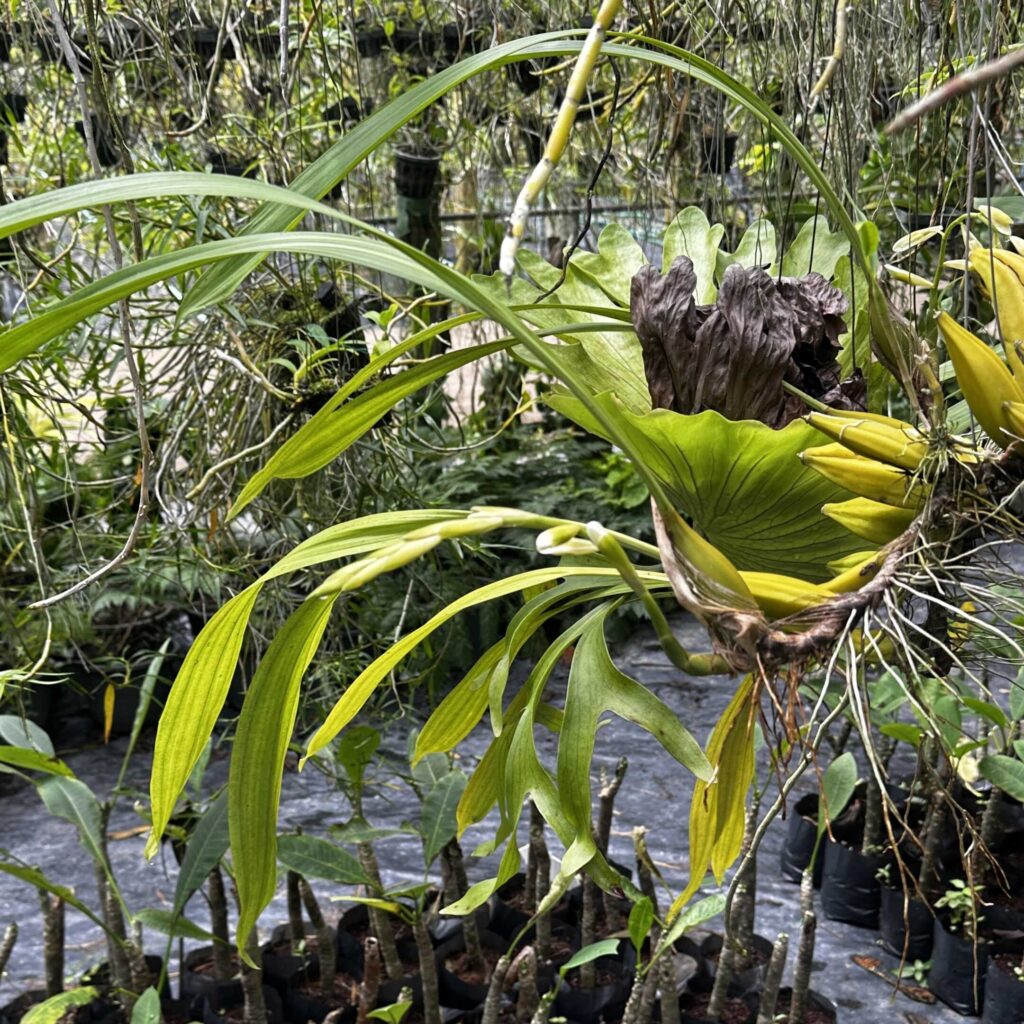
Use a well-draining medium — bark, perlite, and sphagnum moss work well. Many growers prefer mounting on cork or wood to replicate its natural habitat. If you use a pot, make sure it drains very well.
Feed lightly: the “weakly, weekly” rule applies perfectly. Use a balanced fertilizer (20-20-20) at half or quarter strength during growth. Flush the medium with clean water occasionally to prevent salt buildup.
Coelogyne trinervis doesn’t have a strong dormancy period, but its growth slows down during cooler months. Reduce watering and fertilizing accordingly. Avoid overwatering, poor air circulation, or too much sun — these are the most common causes of yellow leaves or rot.
Propagation & Growing On
The easiest propagation method is division — separate when the plant has formed 4–6 mature pseudobulbs. Each division should keep at least two healthy pseudobulbs and a new growth. Use sterilized tools and let the cut dry before replanting.
Older pseudobulbs (backbulbs) can sometimes produce new growths if they’re still viable. Mounting on wood or cork works beautifully — just keep the roots humid until they attach. If repotting, do so in early growth stages, not when the plant is flowering.
Seasonal Care & Bloom Encouragement
Spring–Summer: Active growth period. Water frequently, fertilize regularly, and maintain high humidity. Watch for new shoots and roots.
Autumn: Flower spikes may appear. Keep conditions stable and avoid sudden changes in watering or temperature. The spikes are delicate — handle gently.
Winter: Growth slows. Reduce watering and feeding slightly but do not let it dry out completely. Protect from cold drafts or frost.
Why I (and You) Love Coelogyne trinervis
It’s easy to love C. trinervis. Its beauty isn’t loud — it’s soft and confident. The creamy petals and golden lip glow quietly in the morning light. Watching it bloom feels almost meditative.
It’s also surprisingly easy to care for compared to some Coelogynes. With moderate light, humidity, and airflow, it grows reliably. It’s compact and space-friendly — ideal for small greenhouses or balconies.
For collectors, it’s a delightful rarity. You won’t see it in every nursery, and that’s part of its charm. It teaches patience and observation — two things every orchid grower eventually learns to appreciate.
Learn more about Coelogyne species and other rare orchids at siborchid.com/coelogyne-species.
Troubleshooting & FAQs
Why isn’t my plant blooming?
Usually it’s due to low light, overwatering, or lack of seasonal change. Increase filtered light and provide a small drop in temperature at night to stimulate flowering.
Why are the leaves yellow?
This could mean overwatering, poor drainage, or fertilizer burn. Check the roots and refresh the medium if needed.
Can it grow outdoors in Thailand?
Yes! C. trinervis naturally grows in tropical Southeast Asia, so it thrives in warm, humid climates with good airflow.
How long do blooms last?
Each spike can last for a few weeks under good conditions.
Final Thoughts
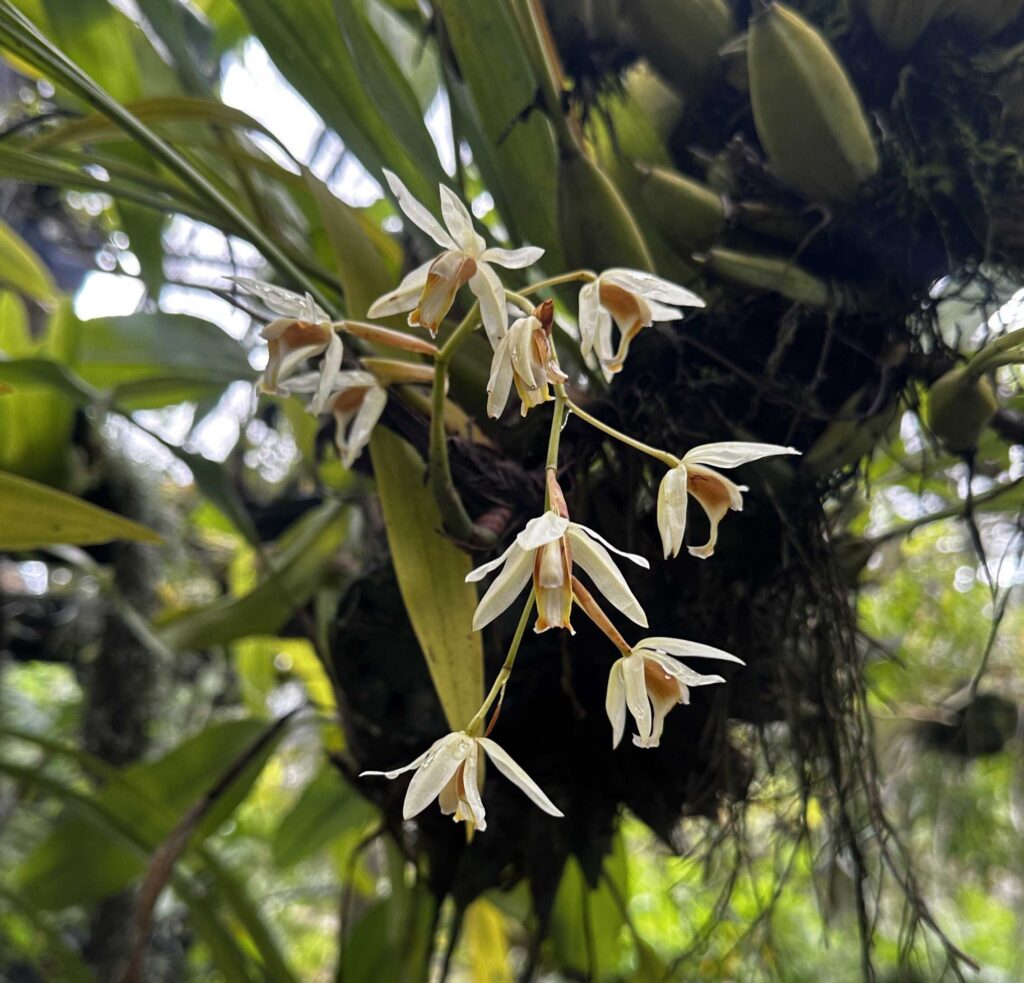
If you’re looking for a charming, resilient orchid to add to your collection, Coelogyne trinervis is a perfect choice. It’s small, graceful, and blooms with a quiet elegance that never gets old.
Once you see those three delicate veins on its leaves and the golden lip of its flowers, you’ll understand why orchid lovers fall for it instantly.