Dendrobium wardianum – Complete Care Guide, Natural Habitat, and Growing Tips
Dendrobium wardianum is one of the most admired species within the genus Dendrobium, valued for its elegant arching canes, fragrant flowers, and seasonal blooming habit. For collectors and orchid enthusiasts, this species represents the classic charm of Himalayan dendrobiums, combining beauty with a growth cycle that closely follows nature. At SibOrchid, we consider Dendrobium wardianum a must-have species for growers who enjoy orchids with a distinct seasonal rhythm and rewarding blooms.
This in-depth guide covers everything you need to know about Dendrobium wardianum, including its natural habitat, botanical characteristics, flowering behavior, cultivation requirements, common mistakes, and tips for successful blooming. This article is written for SEO purposes to support SibOrchid.com and to provide reliable, experience-based information for both beginners and advanced growers.
Introduction to Dendrobium wardianum
Dendrobium wardianum was first described in the mid-19th century and is native to the Himalayan region and surrounding areas of Southeast Asia. It belongs to the section Dendrobium, which is characterized by deciduous or semi-deciduous canes and a pronounced dry rest period.
This species is well known for its large, showy flowers with a soft pastel color palette and a richly colored lip. The blooms are typically fragrant, adding another layer of appeal for collectors who appreciate sensory qualities beyond visual beauty.
Natural Habitat and Distribution
Understanding the natural habitat of Dendrobium wardianum is essential for successful cultivation.
Geographic Range
Dendrobium wardianum is found in:
- Northeastern India
- Myanmar (Burma)
- Northern Thailand
- Southern China
- Laos
Elevation
This species typically grows at elevations between 800 and 1,500 meters above sea level, where temperatures are moderate and seasonal variation is pronounced.
Climate Conditions
In its native environment, Dendrobium wardianum experiences:
- Warm, wet summers with high humidity
- Cooler, dry winters
- Strong air movement
- Bright, filtered sunlight
The plant grows epiphytically on tree trunks and branches, often in areas with good airflow and excellent drainage. These environmental cues strongly influence its growth cycle and flowering behavior.
Botanical Characteristics
Growth Habit
Dendrobium wardianum produces elongated, pendulous to arching canes that can reach 40–60 cm in length. The canes are slightly swollen at the nodes and taper toward the apex.
Leaves
- Leaves are deciduous or semi-deciduous
- Typically drop during the winter rest period
- Oblong to lanceolate in shape
- Medium green in color
Leaf drop is a natural and healthy part of the plant’s annual cycle and should not be mistaken for a problem.
Roots
The root system is relatively fine compared to some evergreen dendrobiums. Roots prefer excellent aeration and do not tolerate prolonged moisture.
Flowers and Blooming Characteristics
Flower Appearance
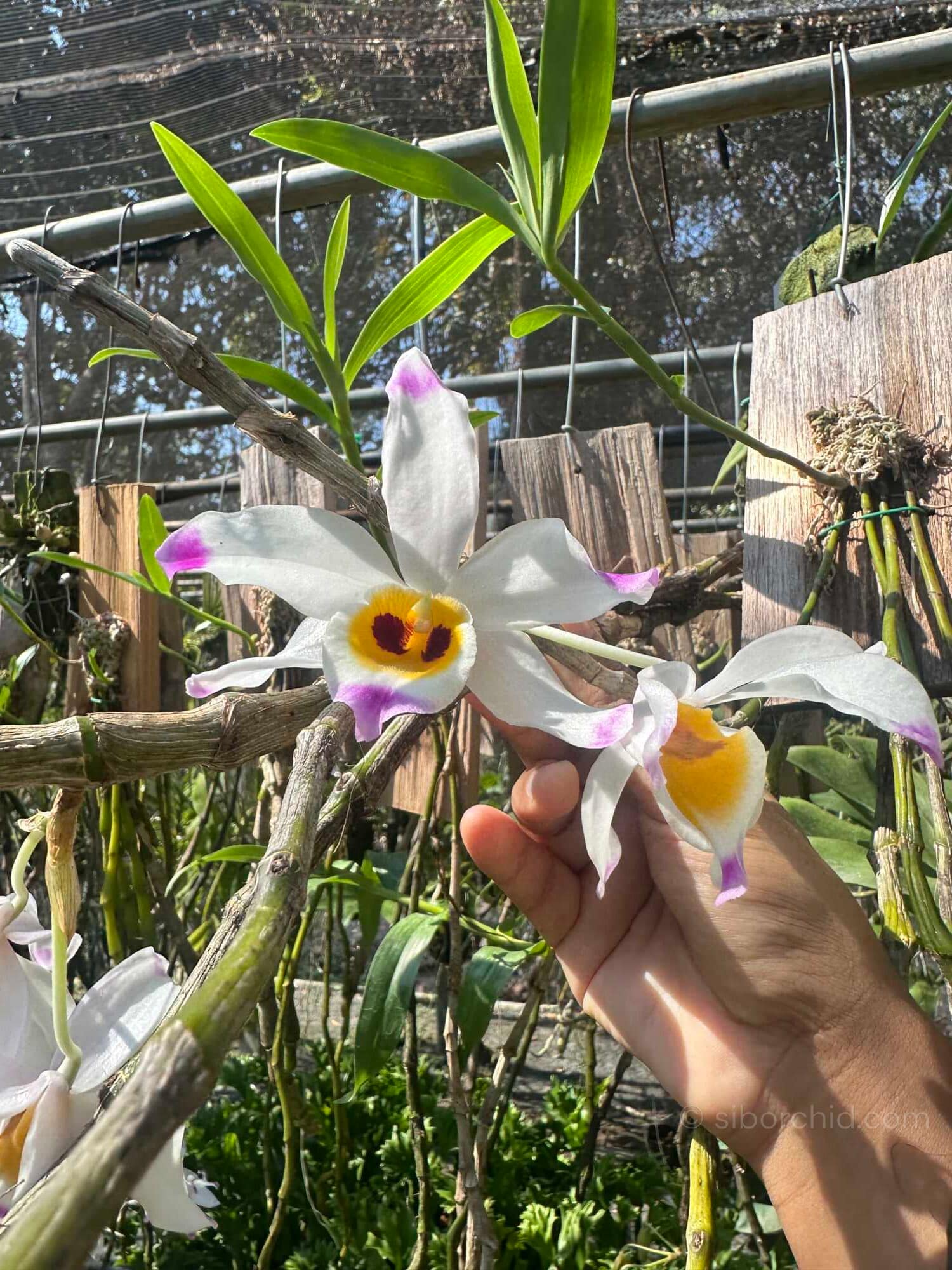
The flowers of Dendrobium wardianum are among its most striking features:
- Diameter: approximately 7–9 cm
- Petals and sepals: pale pink to lavender
- Lip: white to cream with a deep yellow to orange throat, often with red or maroon markings
Fragrance
Blooms are strongly fragrant, often described as sweet and floral, especially noticeable in the morning hours.
Blooming Season
Dendrobium wardianum typically blooms in late winter to early spring, after the completion of its dry rest period.
Flowers emerge from nodes on mature, leafless canes. A single cane can produce multiple blooms, creating a dramatic display when the plant is well grown.

Seasonal Growth Cycle
One of the most important aspects of growing Dendrobium wardianum successfully is respecting its natural seasonal rhythm.
Active Growth (Spring to Summer)
- New shoots emerge from the base of the plant
- Roots grow actively
- Leaves develop fully
- Plant requires regular watering and feeding
Maturation Phase (Late Summer to Autumn)
- Canes harden and mature
- Growth slows
- Fertilizer should be gradually reduced
Rest Period (Winter)
- Watering is significantly reduced
- Leaves may drop
- No fertilizer is applied
- Cooler night temperatures encourage flower bud initiation
Ignoring or shortening the rest period is one of the most common reasons Dendrobium wardianum fails to bloom.
Light Requirements
Dendrobium wardianum prefers bright light but should be protected from direct midday sun.
Ideal Light Conditions
- Bright, indirect light
- Morning sun is beneficial
- Light levels similar to Cattleya orchids
Insufficient light can result in weak canes and poor flowering, while excessive direct sun may cause leaf burn.
Temperature Preferences
Temperature variation plays a critical role in flower induction.
Recommended Temperature Range
- Daytime: 22–30°C
- Nighttime: 10–15°C during winter rest
A noticeable drop in nighttime temperature during winter helps trigger flower bud development.
Watering and Humidity
Watering During Growth
- Water thoroughly when the medium approaches dryness
- Avoid waterlogged conditions
- Ensure rapid drainage
Watering During Rest
- Reduce watering dramatically
- Light misting may be used occasionally to prevent excessive dehydration
Humidity
- Ideal humidity: 60–80%
- Good air circulation is essential to prevent fungal issues
Potting Media and Containers
Recommended Media
- Medium-grade pine bark
- Charcoal and perlite for drainage
- Mounted culture is also suitable in humid climates
Containers
- Clay pots are preferred for better airflow
- Shallow baskets work well for pendulous growth
Repot only when new root growth begins, usually in early spring.
Fertilization Strategy
Growing Season
- Balanced fertilizer (e.g., 20-20-20) at 1/4 to 1/2 strength
- Apply every 1–2 weeks
Pre-Rest Adjustment
- Switch to low-nitrogen fertilizer in late summer
- Stop fertilizing completely during winter
Over-fertilization can lead to excessive vegetative growth at the expense of flowering.

Common Problems and Solutions
No Flowers
Common causes:
- Insufficient light
- No winter rest
- Excess nitrogen
Cane Shriveling
Mild shriveling during winter is normal. Severe shriveling may indicate extreme dehydration.
Pests
- Mealybugs
- Scale insects
- Spider mites
Regular inspection and good airflow help prevent infestations.
Propagation
Dendrobium wardianum can be propagated by:
- Division of mature clumps
- Keikis (rare, but possible)
Propagation is best done in early spring when new growth appears.
Why Grow Dendrobium wardianum?
This species is ideal for growers who:
- Appreciate fragrant flowers
- Enjoy orchids with a natural seasonal cycle
- Want a classic species with strong collector value
When grown correctly, Dendrobium wardianum rewards patience with spectacular blooms that appear reliably year after year.