

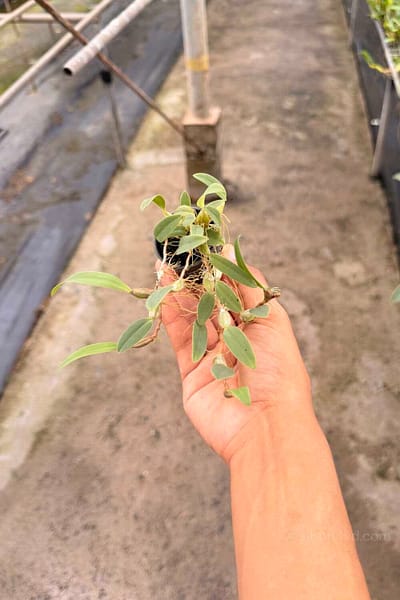
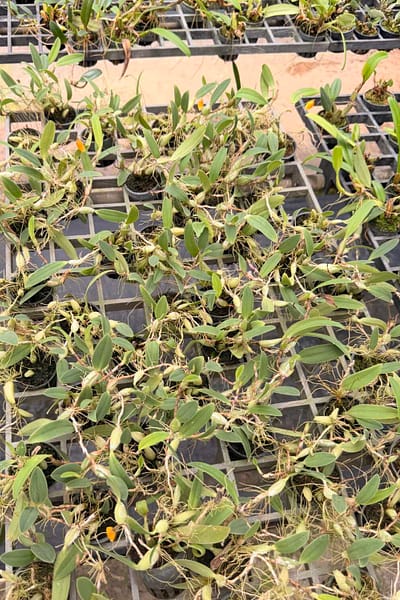
Bulbophyllum pardalotum – Blooming Size Orchid
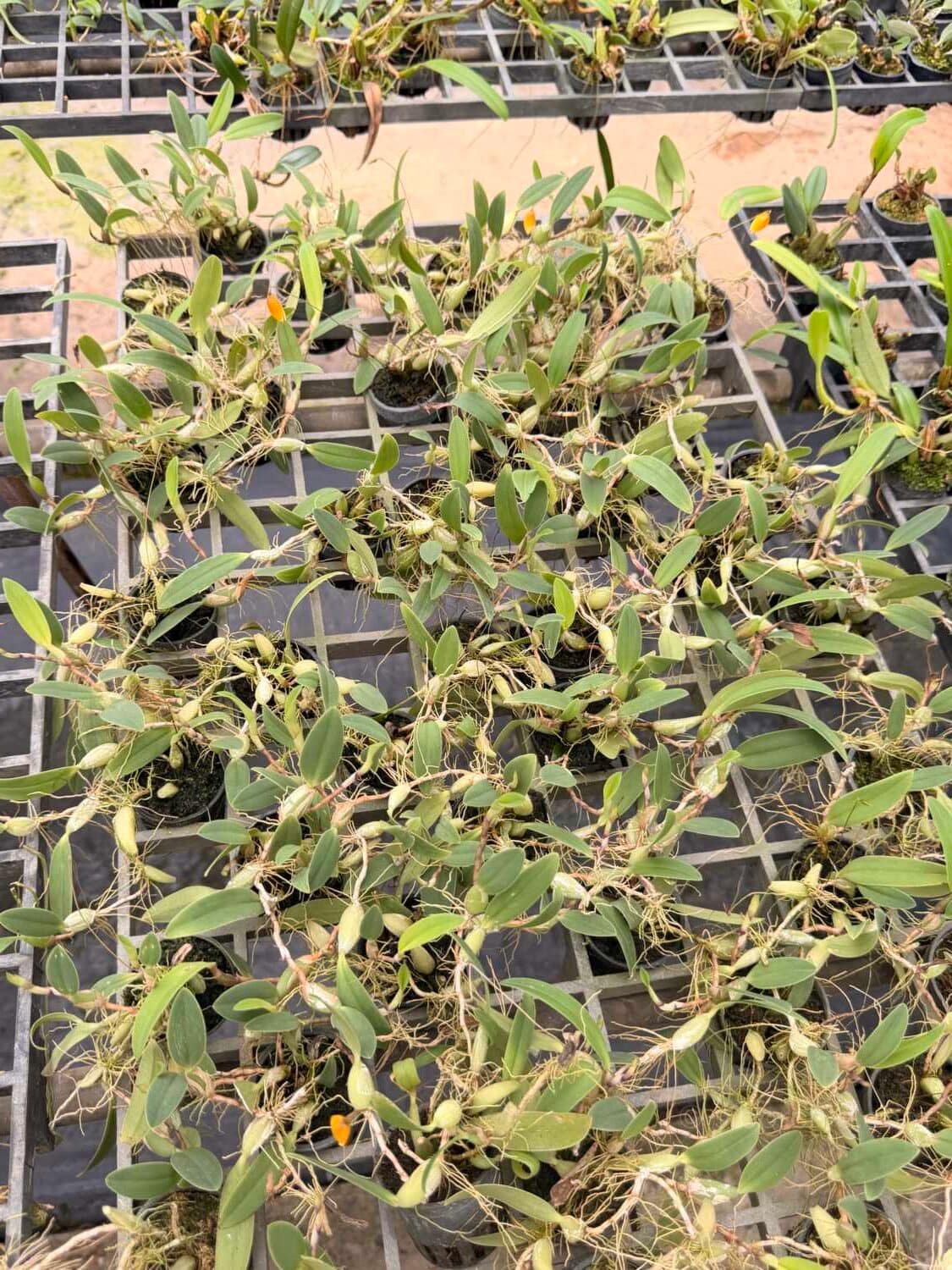
Quantity: 1 Plant
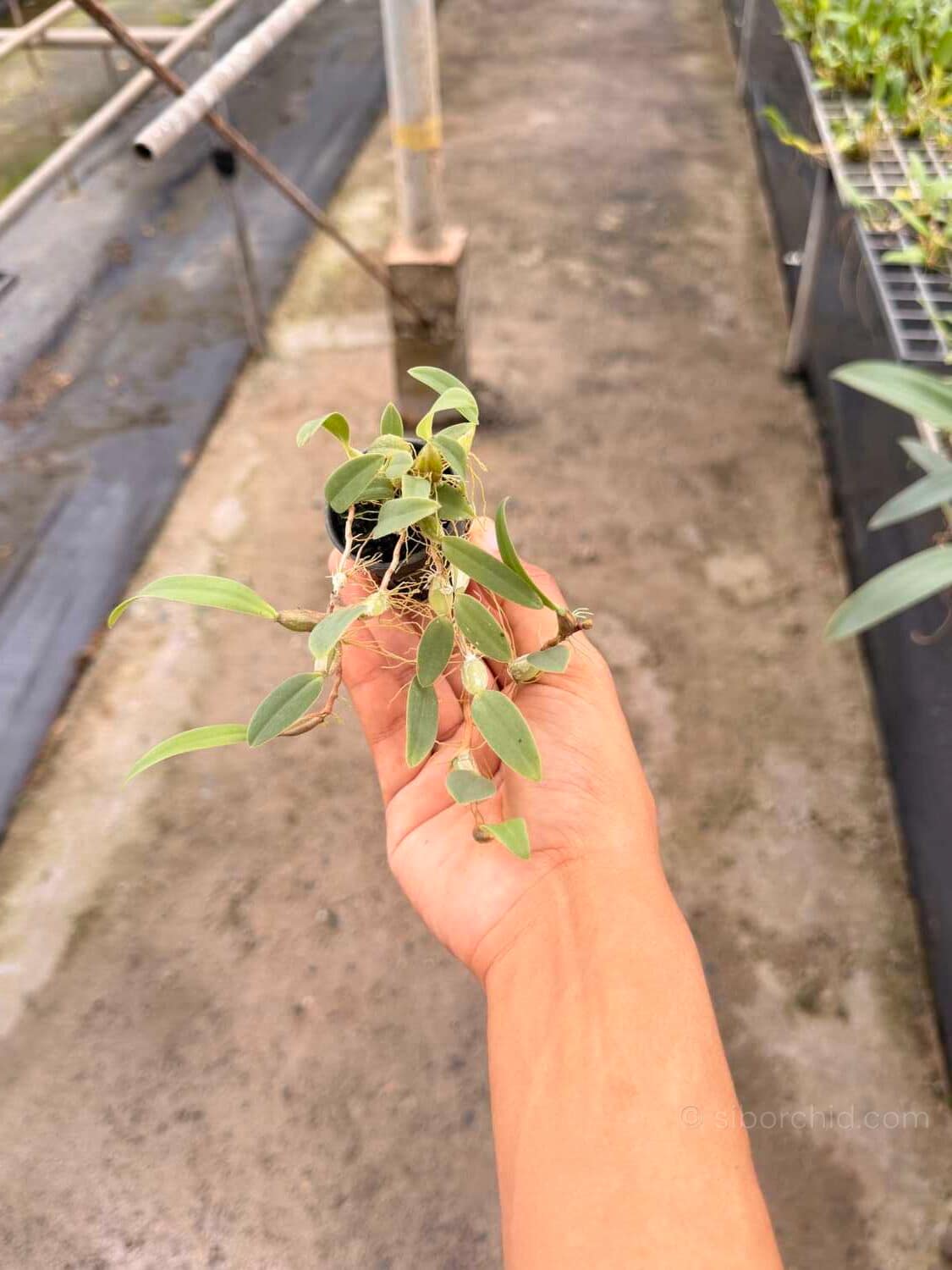
Size: Blooming Size (5–10 Bulbs)
Description
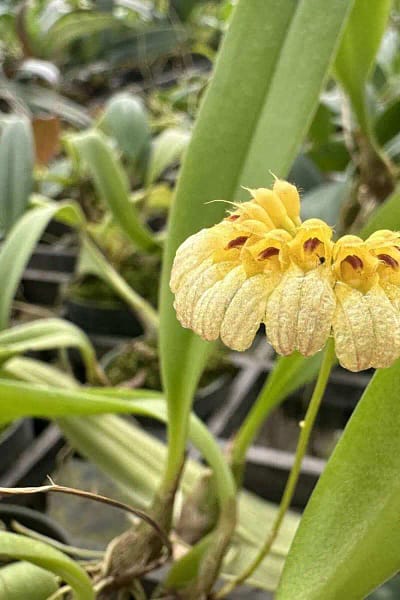
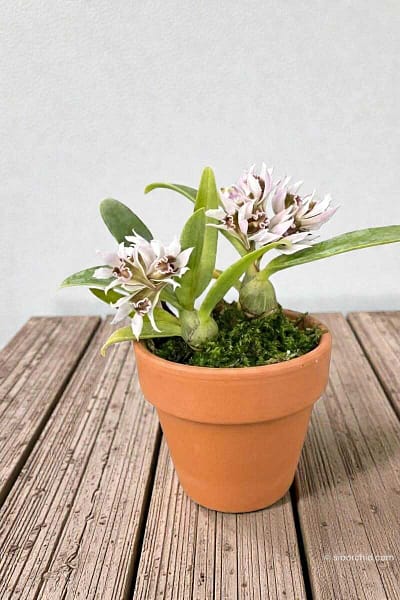
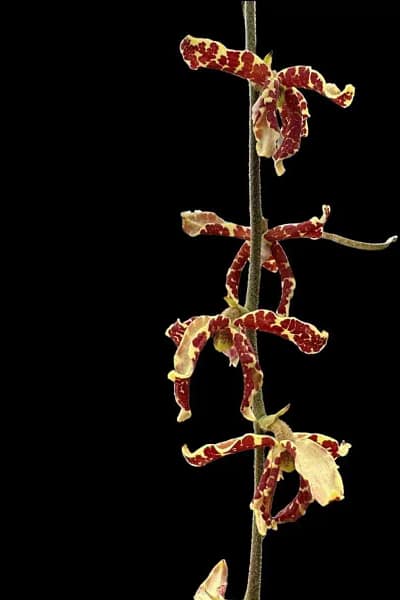
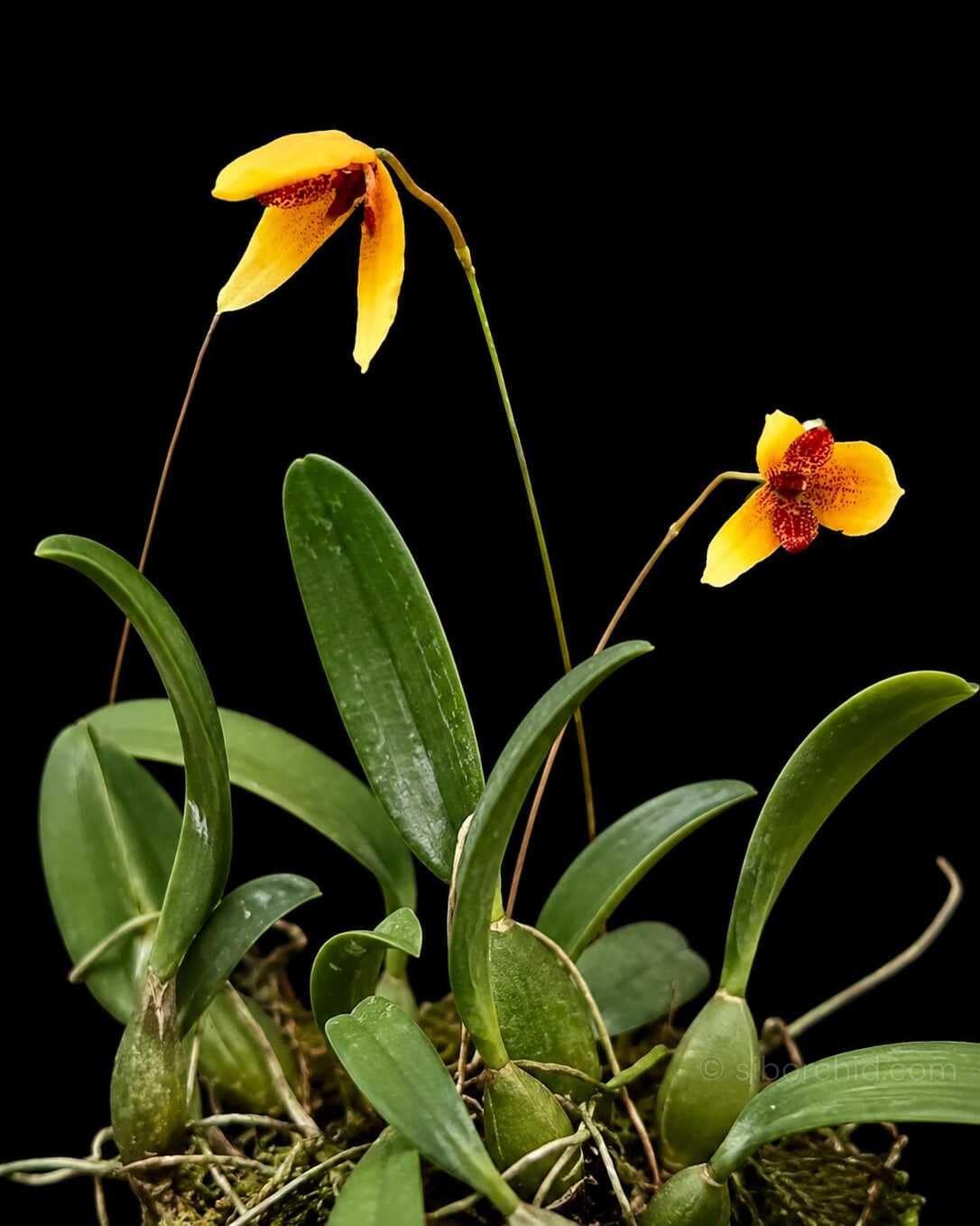
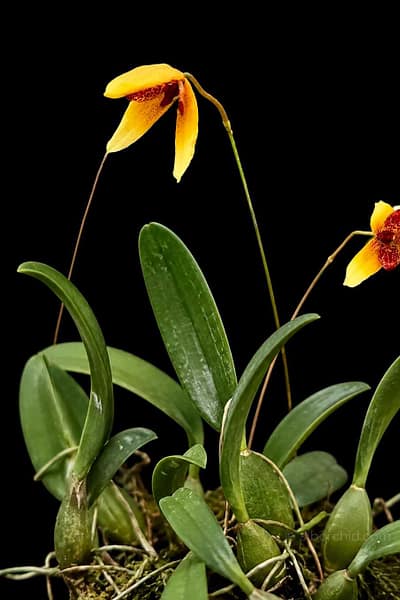
Bulbophyllum pardalotum is a highly sought-after miniature species celebrated for its strikingly unique, vividly striped flowers. The brilliant orange-yellow sepals feature rich, dark maroon veining that perfectly contrasts its dark, glossy lip. This compact epiphyte grows via a creeping rhizome with neat, distinct pseudobulbs, making it an excellent candidate for mounting or shallow basket culture.
| Attribute | Profile |
| Origin | Philippines (Montane forests, typically 1,200 to 2,000 meters) |
| Growth Habit | Miniature creeping epiphyte |
| Flower Size | Approximately 2 to 2.5 cm on a tall, slender inflorescence |
| Bloom Season | Intermittent throughout the year, heavily influenced by seasonal temperature shifts |
| Fragrance | Mild, characteristic of the genus |
Characteristics
- Miniature epiphytic orchid with creeping rhizomes
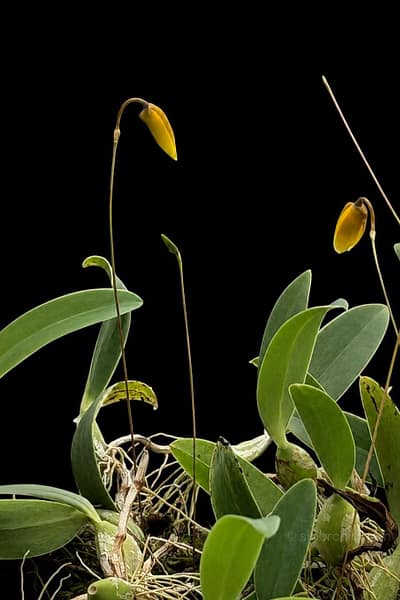
- Forms small ovoid to four-angled pseudobulbs
- Each bulb produces a single leathery green leaf
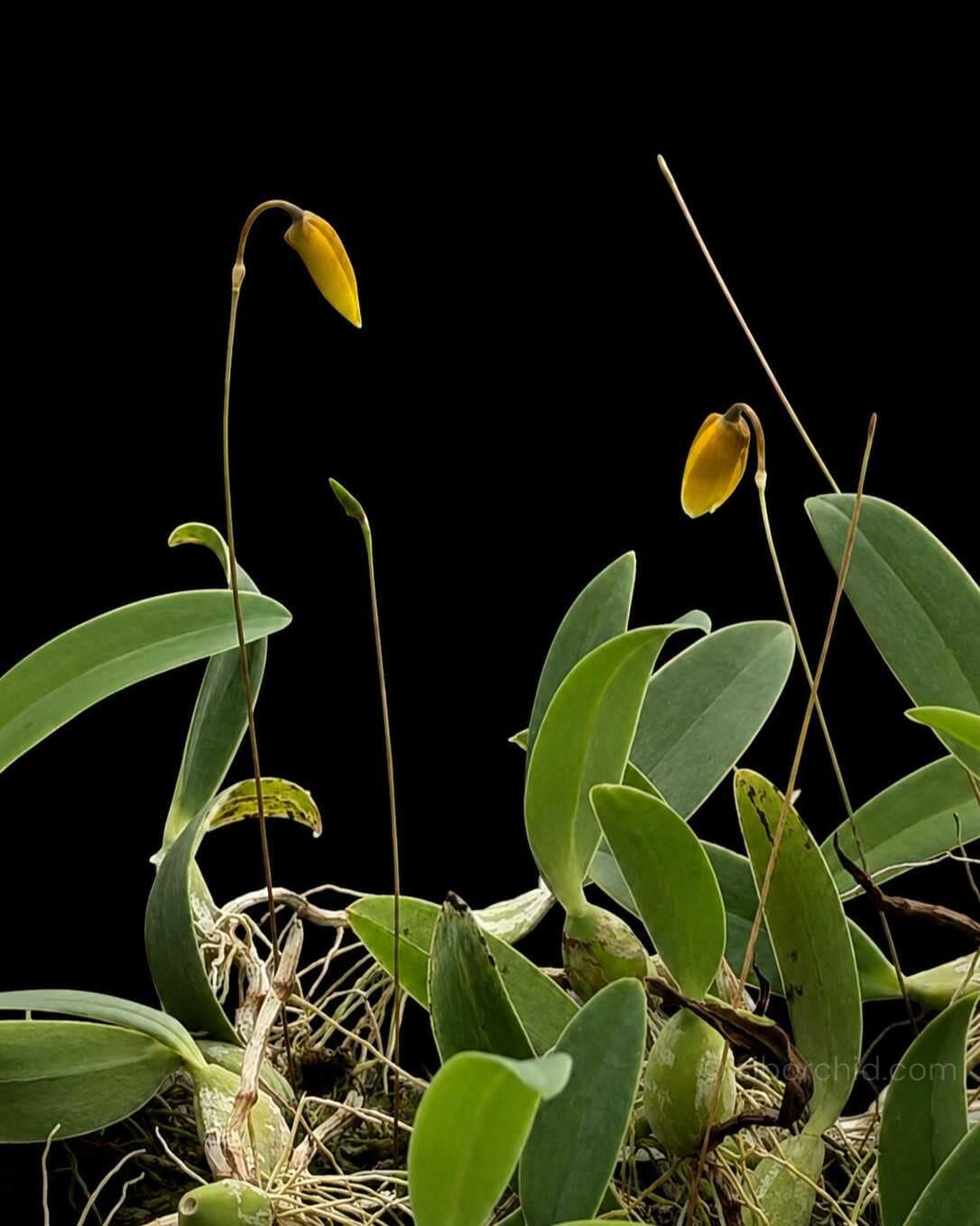
- Bears a single flower on an upright, slender inflorescence
- Flowers measure approximately 4 cm (1.6 inches) across
- Bloom features striking yellow to cream backgrounds with brown to reddish-purple leopard-like spots
- Individual flowers typically last around 10 days, opening during the day and closing at night
Highlights
- Rare Philippine species for collectors
- Attractive leopard-spotted flowers
- Compact miniature growth suitable for limited growing space
- Excellent choice for mounted culture
- Blooming-size plant with 7–10 healthy bulbs
Care Guide
- Light: Bright, filtered light
- Temperature: Cool to intermediate (15–25°C / 59–77°F)
- Humidity: 70–85% with strong air movement
- Watering: Keep evenly moist throughout the year, allowing only slight drying between waterings.
- Mounting: Best grown mounted on tree fern, cork bark, or hardwood, allowing the creeping rhizome to spread naturally.
- Fertilizer: Feed with a balanced orchid fertilizer at ¼ strength every 2–3 weeks during active growth.