



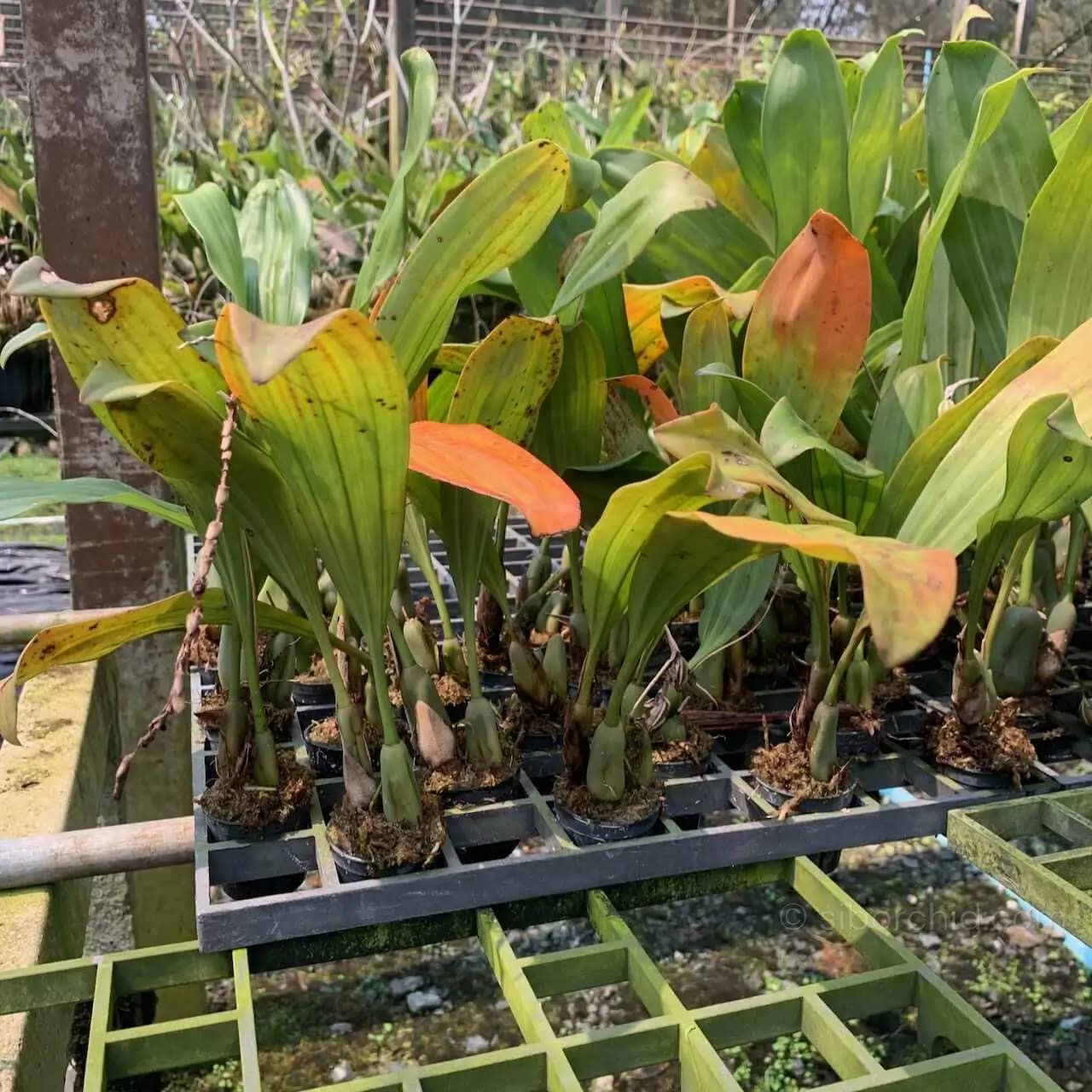
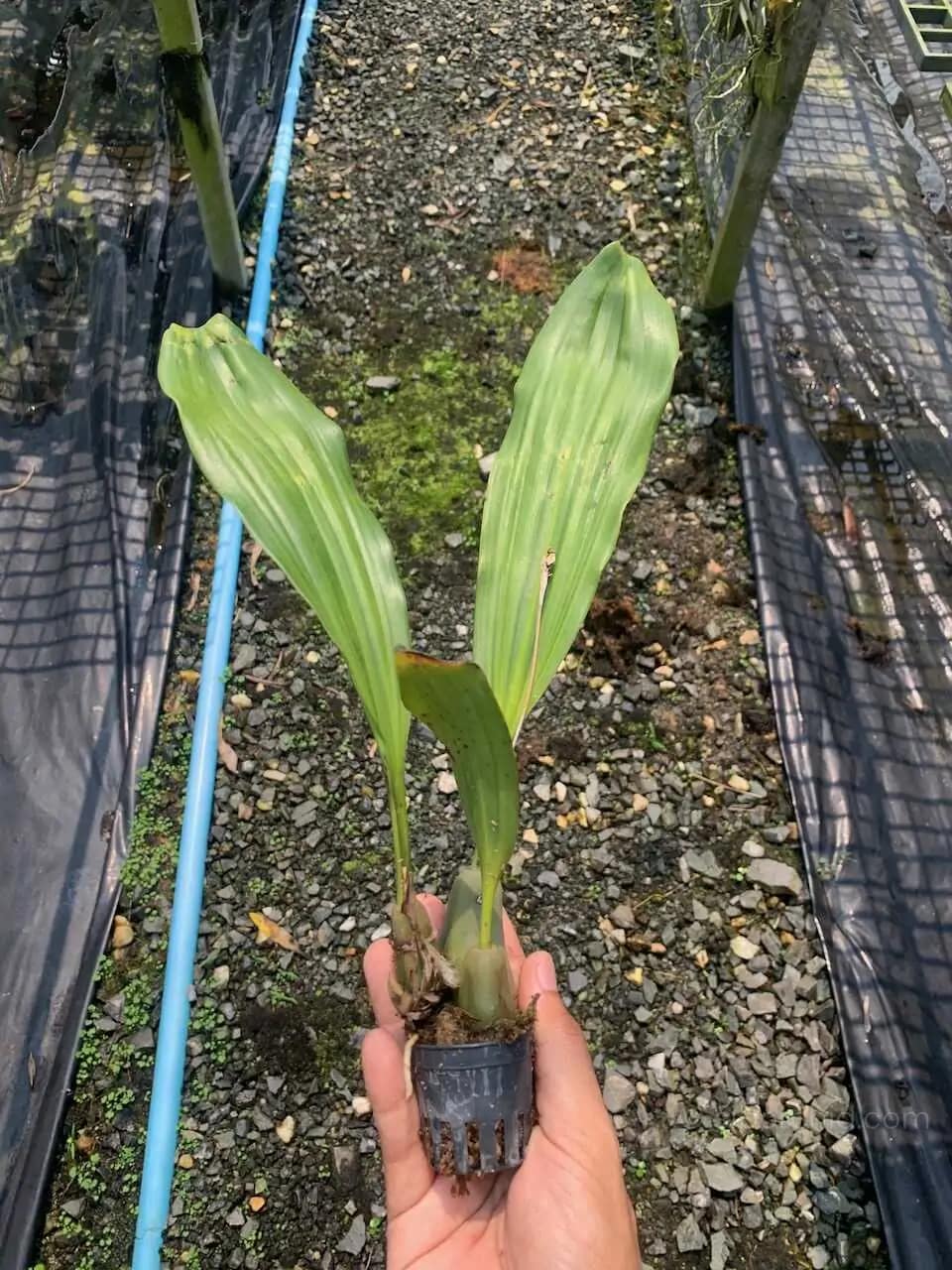
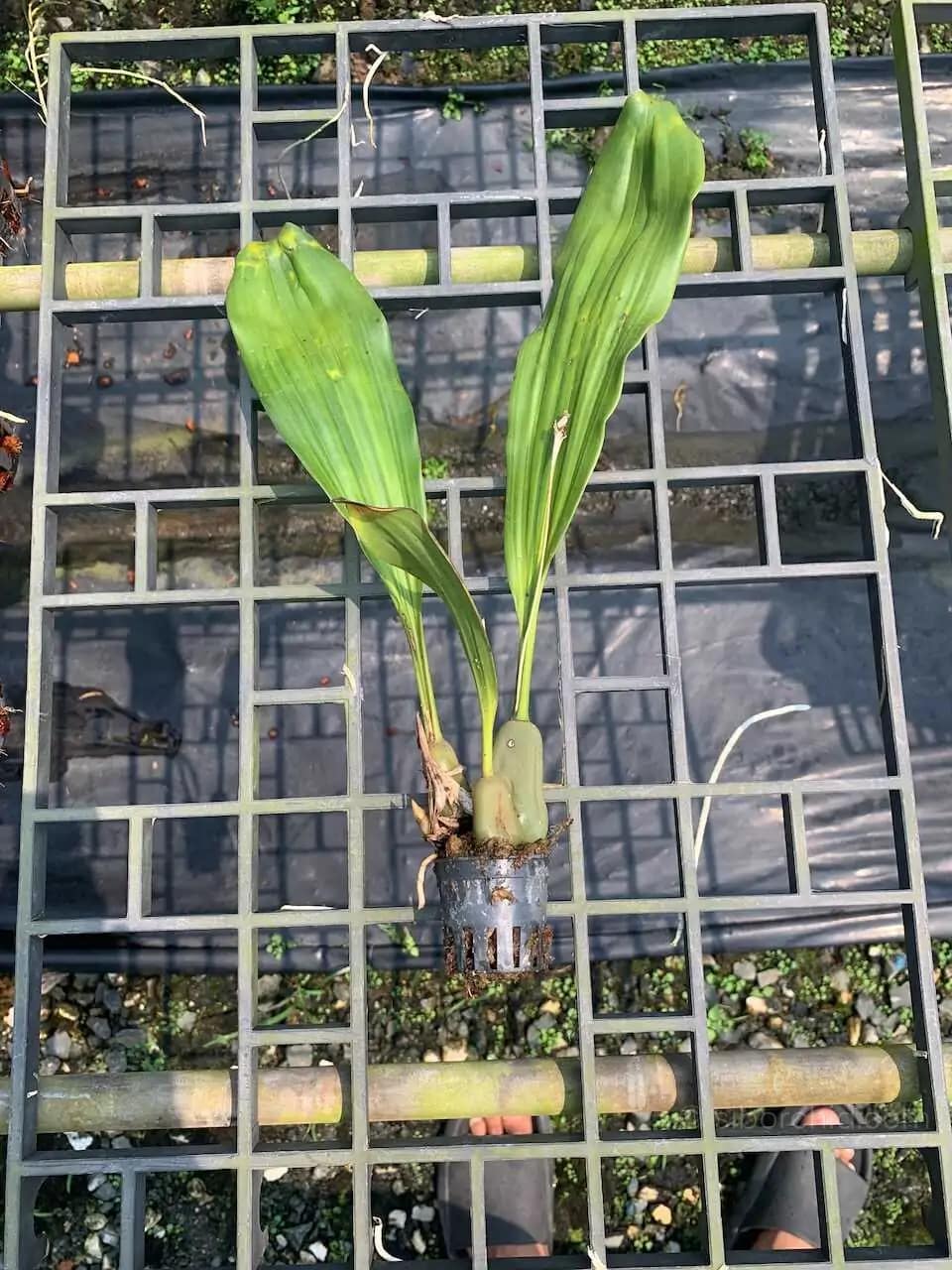


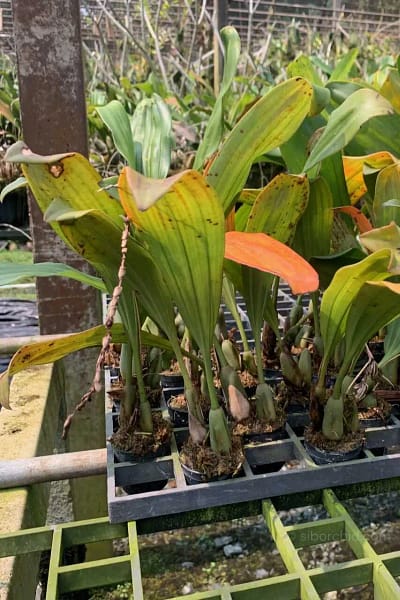
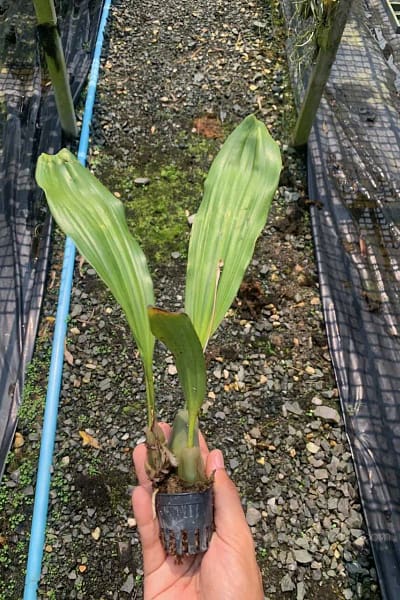
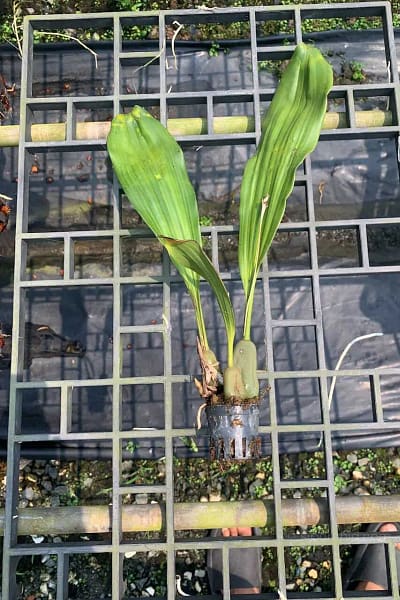
Pholidota imbricata (Necklace Orchid)
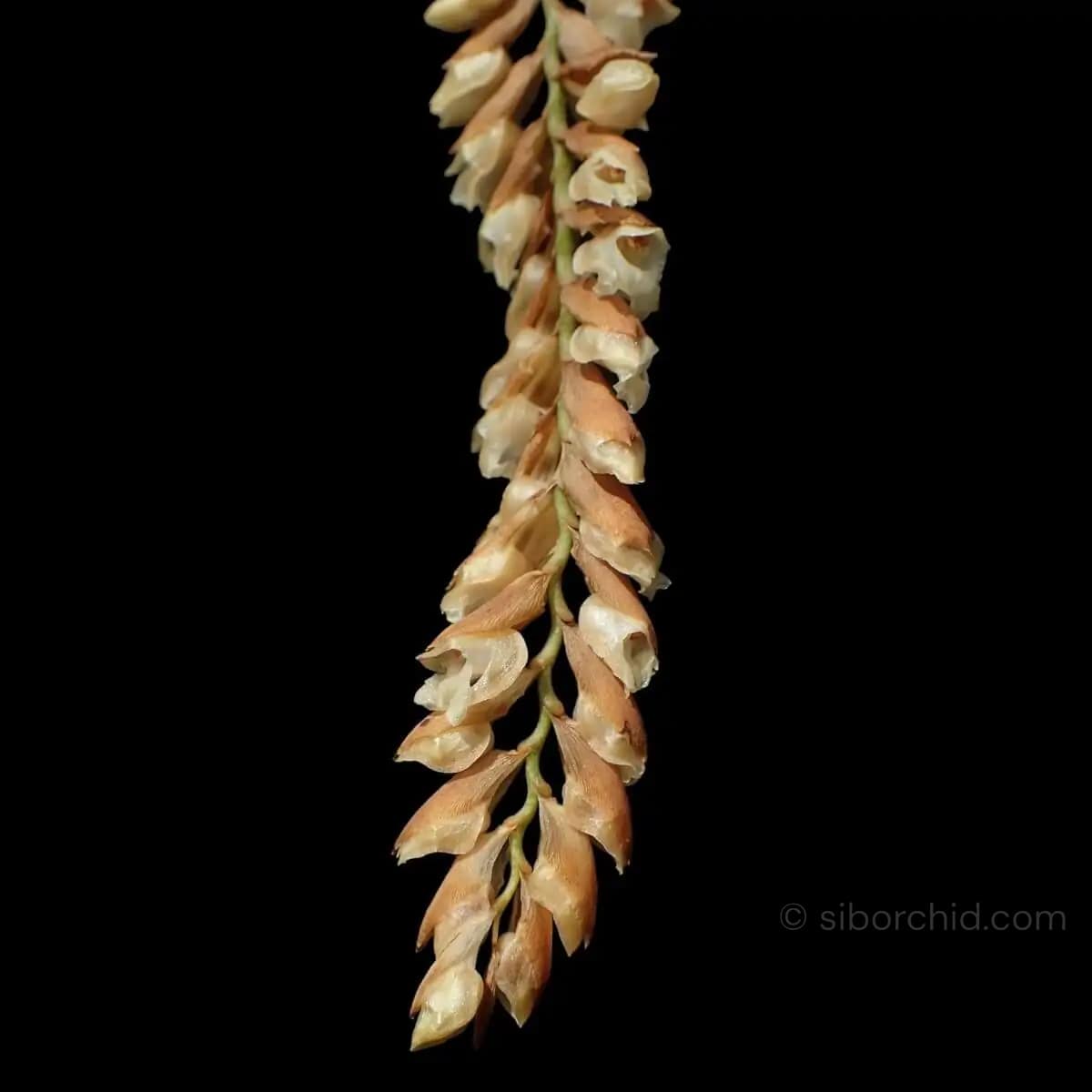
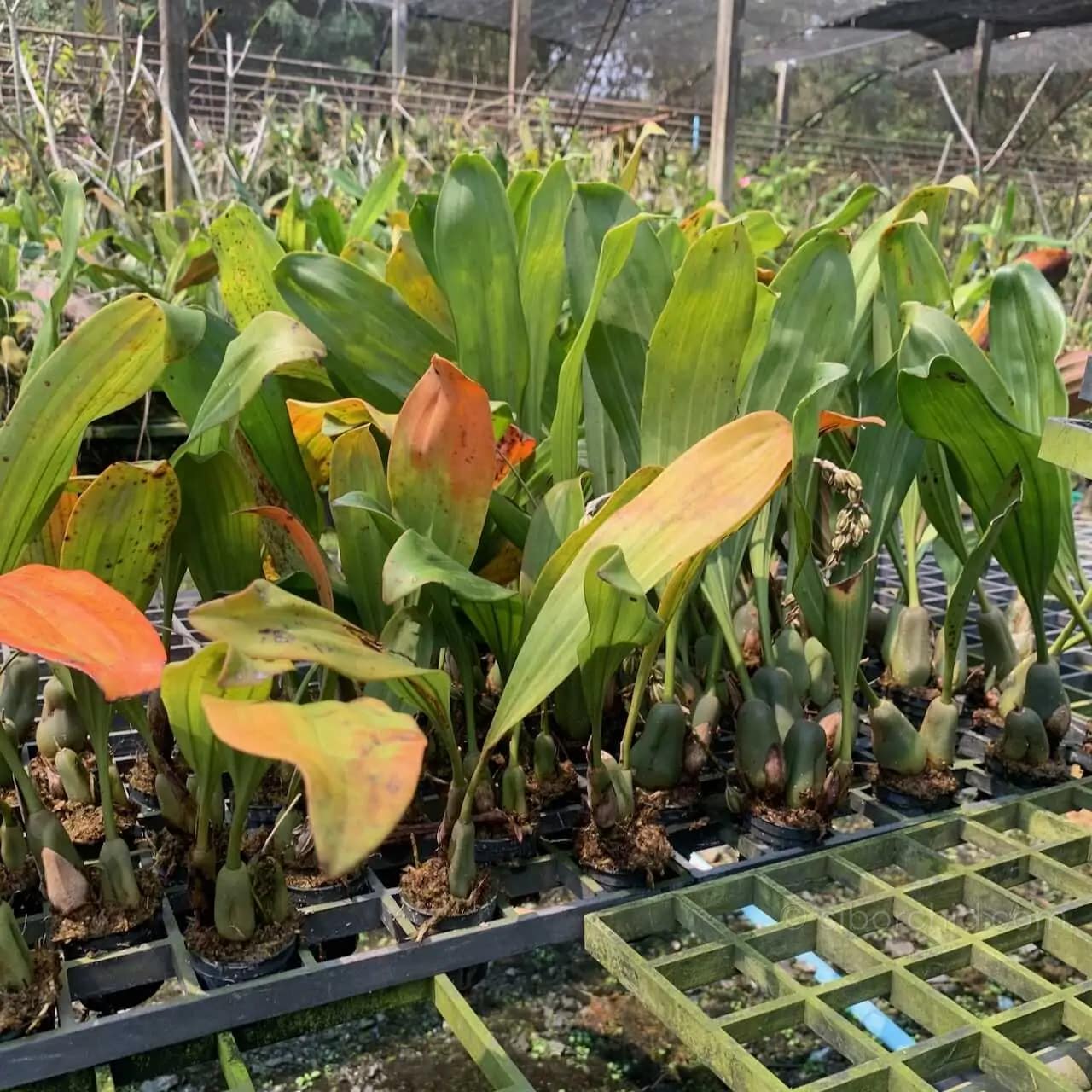
Few orchids tell a story as vividly as Pholidota imbricata. Widely known as the Necklace Orchid or Rattlesnake Orchid, this species produces crowded clusters of pseudobulbs, each carrying a single pleated, leathery leaf and a wiry flowering spike lined with up to sixty small, fragrant, cream to greenish-white cup-shaped blooms arranged in two neat ranks — the effect is exactly what the common name promises: a delicate strand of blossoms, cascading like beads on a chain.
The genus Pholidota takes its name from the Greek for “scaly,” a nod to the overlapping bracts along its flower spikes — a detail echoed in the species name imbricata, meaning “overlapping.” Native across a wide range from South China and India through Southeast Asia to Australia, this orchid grows naturally as an epiphyte or lithophyte, at home on tree bark or moss-covered stone alike — making it a resilient, forgiving addition to any collection.
Why collectors love it
- Distinctive cascading, bead-like inflorescence — unlike any other orchid in a collector’s shelf
- Fragrant blooms that reward close attention
- Adaptable and easy-growing once established, tolerant of a range of light conditions
- Compact clumping habit, ideal for hanging baskets or mounted display
Care at a glance
- Light: Shade to bright indirect light, roughly 1,500–2,500 footcandles
- Temperature: Cool to intermediate, tolerating lows near 48°F (9°C) up to 78°F (26°C)
- Water: Even moisture and high humidity during active growth; ease off water and fertilizer in winter
- Mounting: Thrives mounted, in a hanging basket, or potted in a well-draining orchid mix
- Bloom season: Spring through summer