










Highlights
- Native habitat: Malesia and Papuasia — Peninsular Malaysia, Sumatra, Borneo, Java, Sulawesi, the Moluccas, the Philippines, New Guinea, the Bismarck Archipelago, and the Solomon Islands
- Bloom season: Spring to summer
- Fragrance: Yes — strongly fragrant, often compared to licorice
- Difficulty: Intermediate
- Mature size: Large
Description
Natural History
Coelogyne asperata ranges across the rainforests of Malesia and Papuasia, from Peninsular Malaysia and Sumatra through Borneo, Java, Sulawesi, and the Moluccas to New Guinea and the Solomon Islands. In the wild it grows as an epiphyte — occasionally a lithophyte — in humid lowland-to-montane forests, often clinging to trees or limestone faces near rivers, from near sea level up to roughly 1,900–2,000 meters.
Flowers
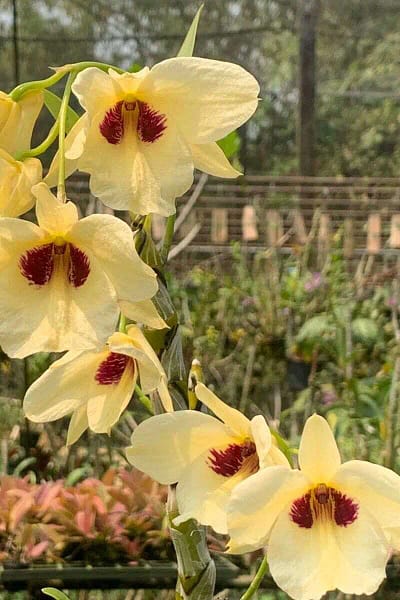
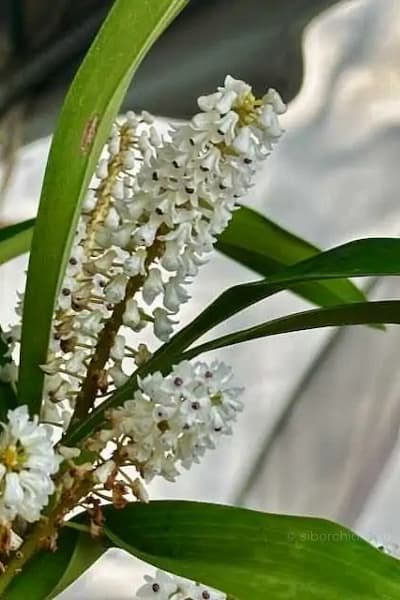
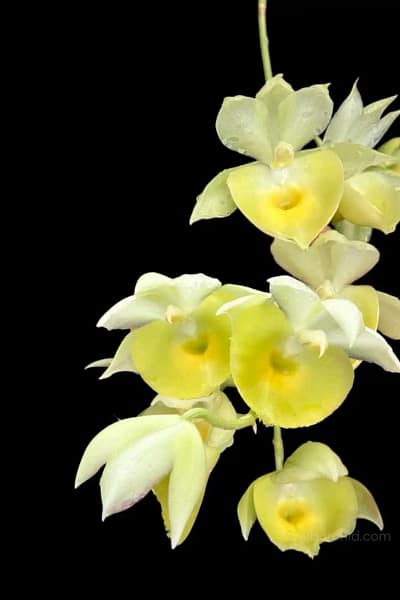
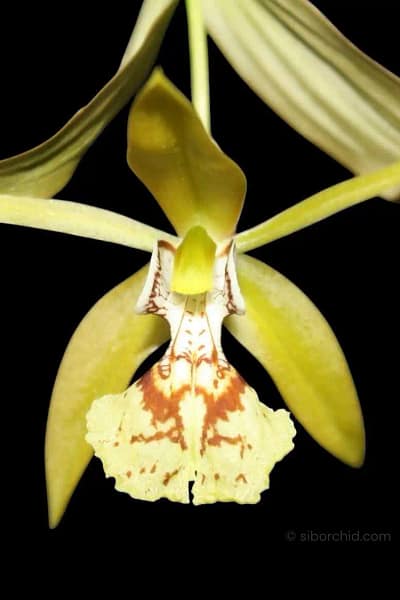
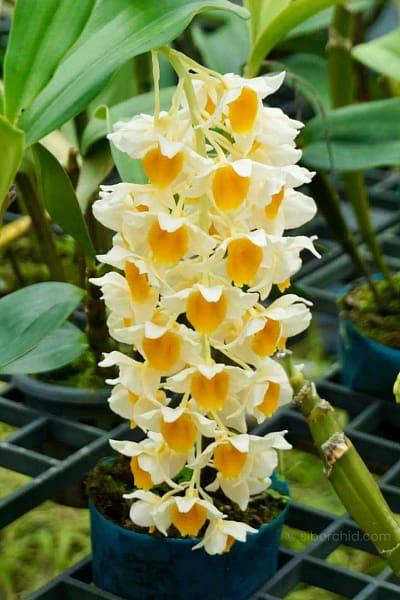
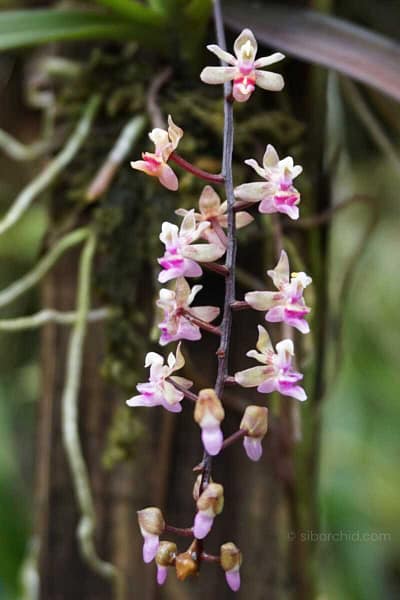
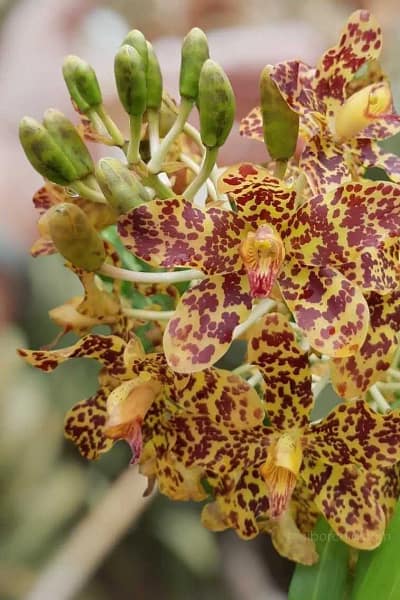
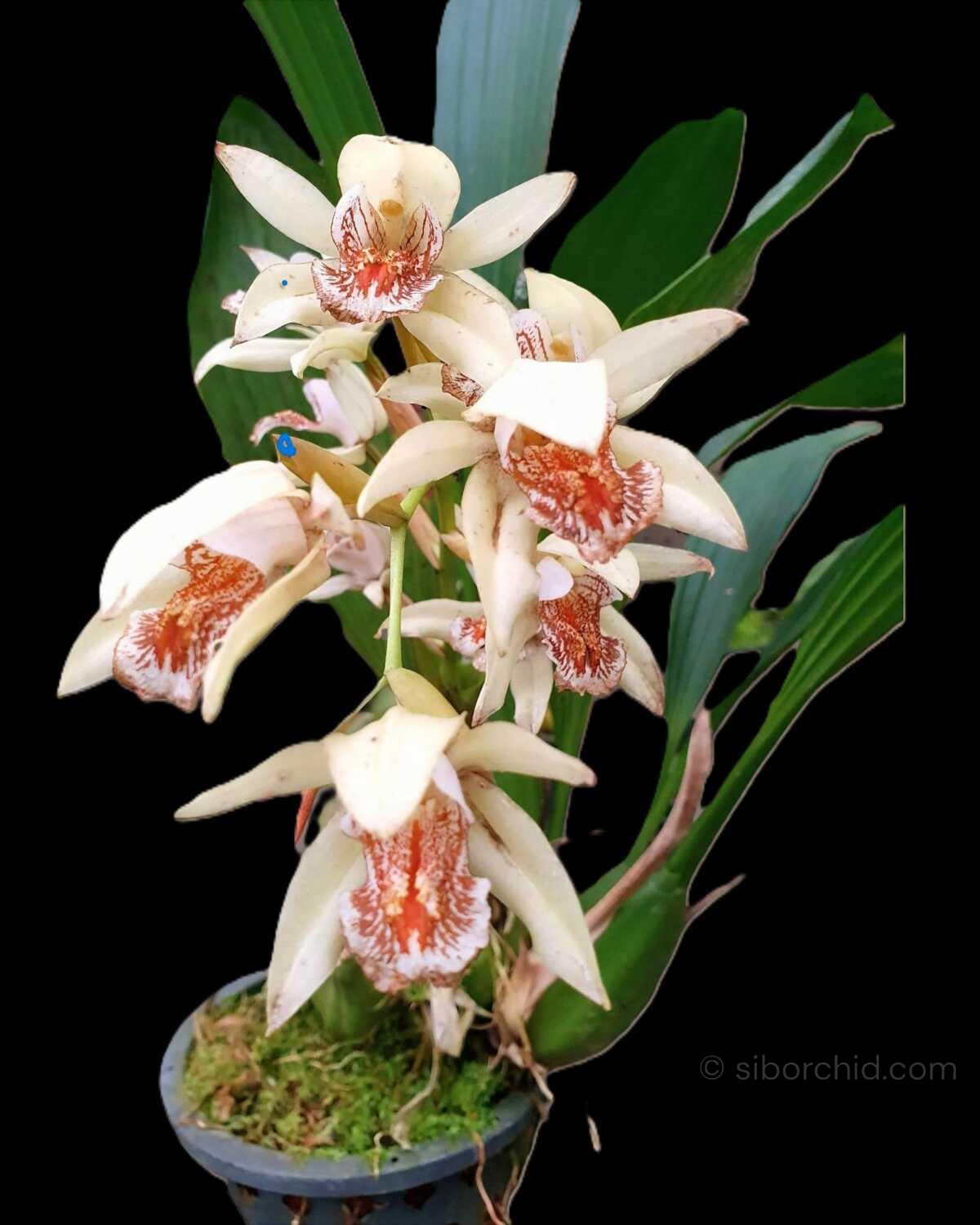
This is one of the genus’s most dramatic bloomers. Each spring, your Coelogyne asperata sends up an arching spike 30–45 cm long, carrying 15 to 40 fragrant, waxy flowers roughly 2–3 inches (5–7.5 cm) across. Cream to pale yellow sepals and petals frame a ruffled lip marked with a bright orange ridge and reddish-brown veining. The show lasts 2–4 weeks and fills the room with a sweet, licorice-like scent you won’t forget.
Growth Habit
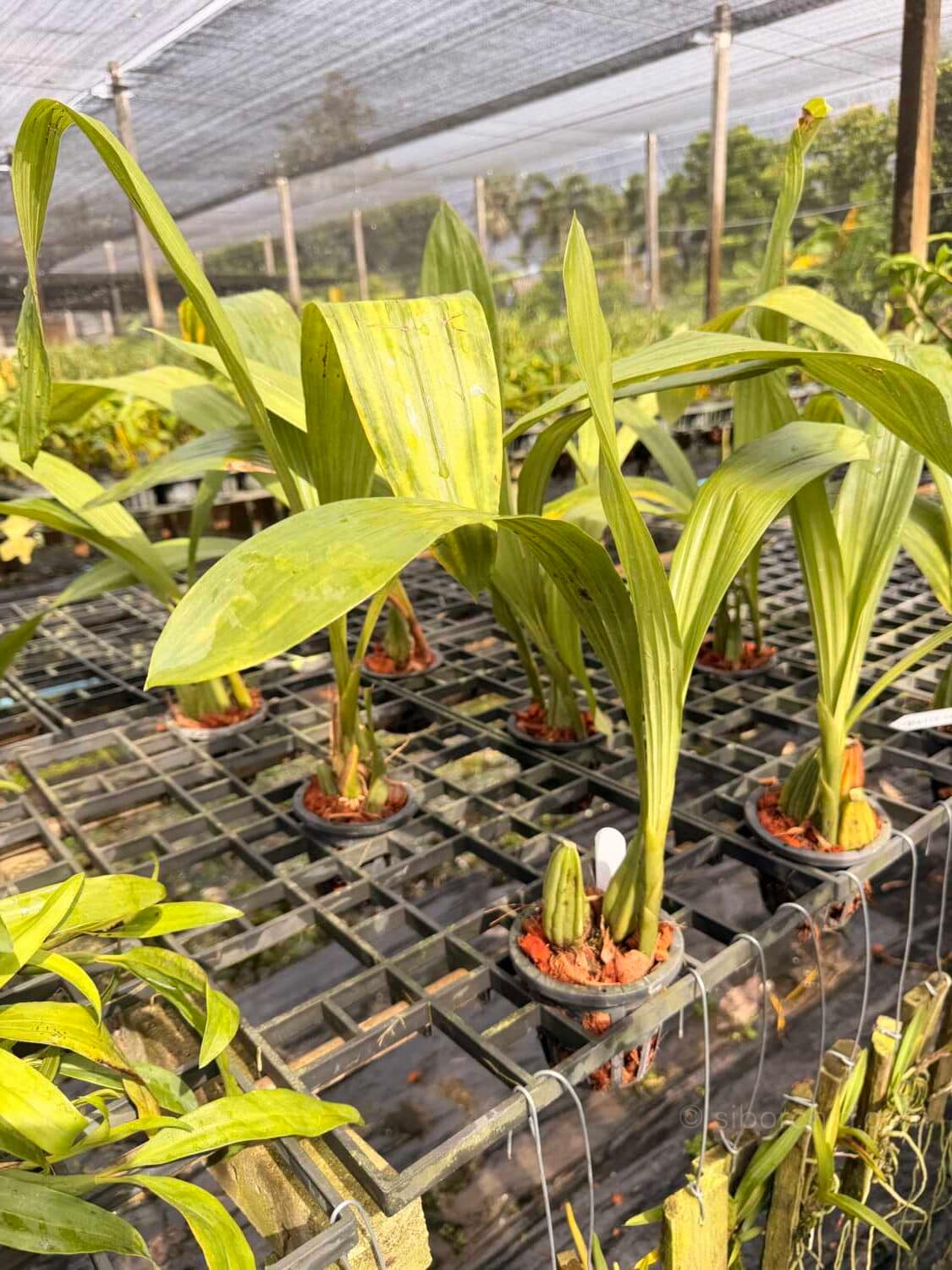
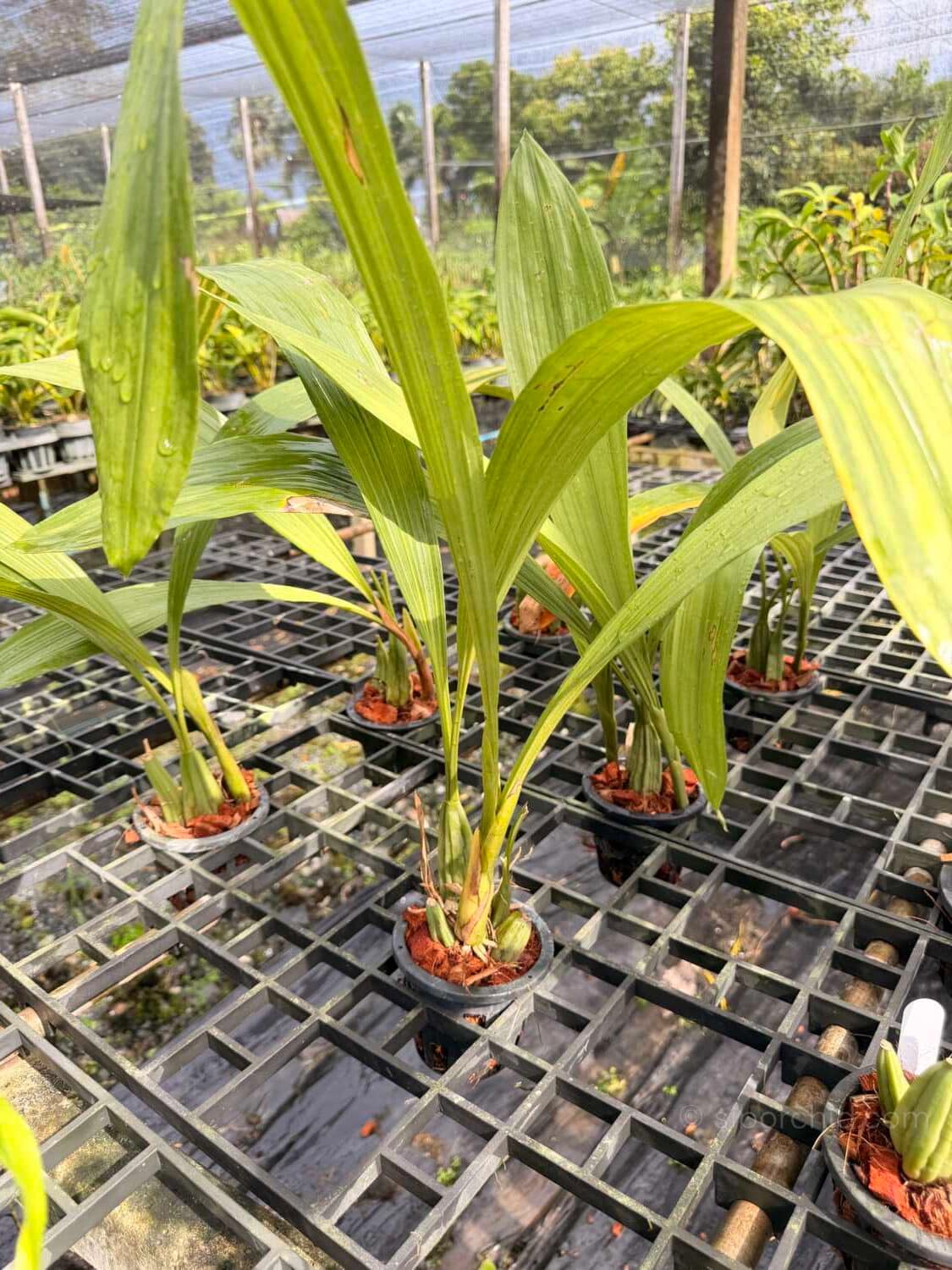
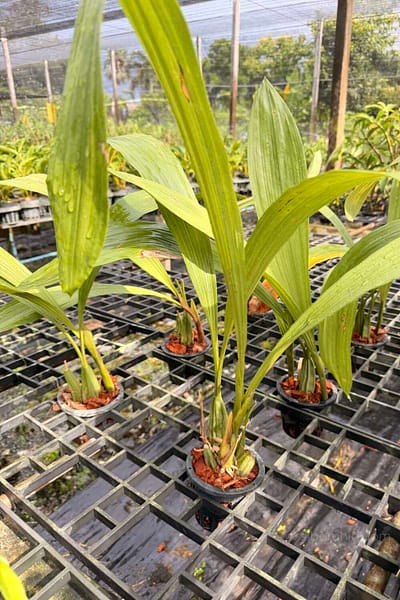
A robust, large-growing epiphyte, this plant forms rounded, ribbed “goose-egg” pseudobulbs topped with a pair of broad, pleated leaves. It’s a vigorous spreader — give it a few seasons and you’ll have a generous, well-established specimen. A true statement plant once mature.
Care Guide
LIGHT: Your Coelogyne asperata thrives in bright, filtered light — think dappled shade beneath taller trees, roughly 20,000–30,000 lux. Avoid direct afternoon sun, which can scorch the broad leaves.
TEMPERATURE: A warm-to-intermediate grower reflecting its lowland-to-montane rainforest origins. It’s comfortable in typical tropical greenhouse or windowsill conditions, with a slightly cooler, drier rest in winter to help set next season’s blooms.
HUMIDITY: This one loves consistently high humidity, ideally 60–80%. Strong air movement around the roots and foliage keeps it healthy and disease-free.
WATER: Water regularly through the growing season, letting the medium approach dryness between waterings. Ease off slightly in winter, but never let it dry out completely for long — unlike some Coelogyne relatives, it doesn’t have a strict deciduous rest.
FERTILIZER: Feed weekly during active growth at 1/4–1/2 strength with a balanced orchid fertilizer. Many growers favor higher nitrogen in spring and summer, shifting to higher phosphorus in late summer and autumn to support blooming. Flush the pot periodically to prevent mineral buildup.
MOUNTING/POTTING: Best grown in a basket or pot with a coarse, fast-draining mix — fine fir bark, tree fern fiber, and perlite, or sphagnum moss. Given its size and cascading spikes, a hanging basket beautifully showcases this plant in bloom.
Specifications
| Botanical name | Coelogyne asperata Lindl. |
| Family | Orchidaceae |
| Origin | Malesia and Papuasia (Malaysia, Indonesia, Philippines, New Guinea, Solomon Islands) |
| Plant size | Blooming size |
| Flower size | Approximately 2–3 inches (5–7.5 cm) |
| Bloom season | Spring–summer |
| Growth habit | Epiphytic (occasionally lithophytic); pseudobulbous |
| CITES status | Appendix II |